
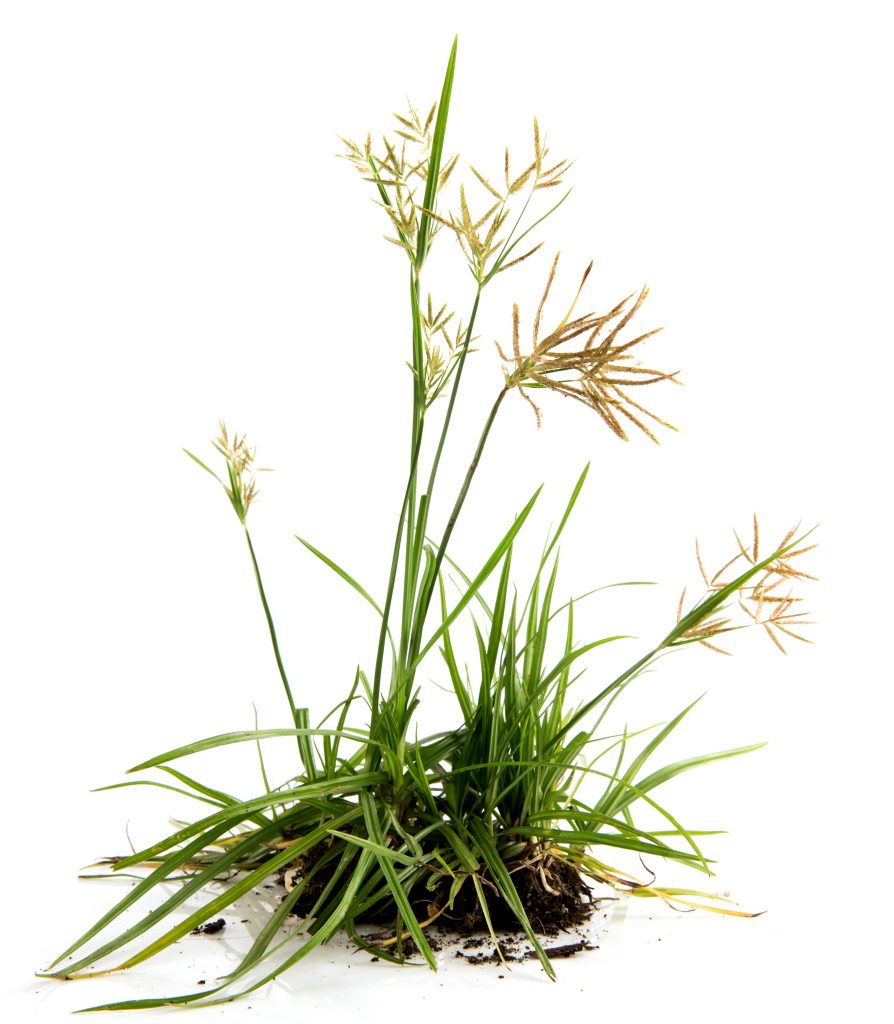
 Nut Grass is an annoying fast-spreading long-lived perennial lawn weed that grows from underground tubers.
A member of the sedge family – other names are nut sedge, coco grass and Java grass – it thrives in hot weather and areas with poor drainage.
Nut Grass can lay dormant underground for long periods, reappearing after disturbance by cultivation or when annual weeds have been removed or crops harvested and there is no competition for water or nutrients.
Nut Grass is often introduced to gardens in contaminated soil brought in for garden beds or for top dressing lawns.
Because of its creeping network of underground stems, called rhizomes, nut grass can sneak into your lawn from nearby footpaths, gardens and parks.
Nut Grass can be very difficult to control, so it’s best tackled early.
How to Identify Nut Grass
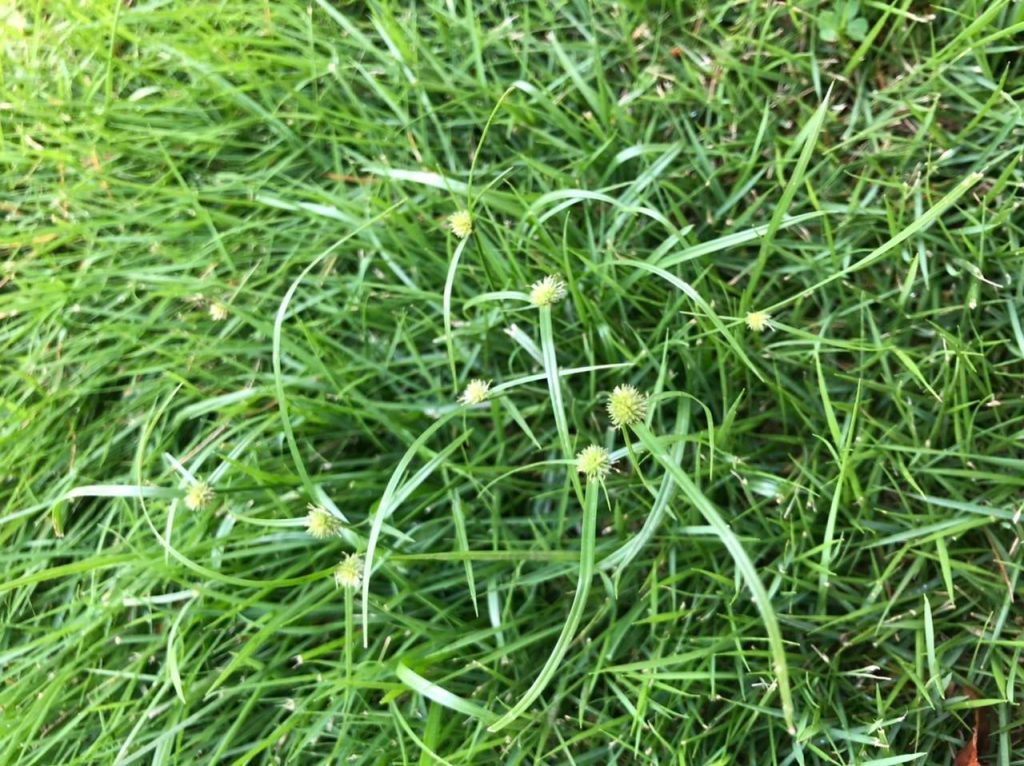
Nut Grass has a very narrow leaf and is easily distinguishable from most turf varieties.
It can grow up to 50cm tall, putting out three blades from the base of each three-sided stem. The roots can run very deep, reaching as far as 20-30cm under the surface.
New plants usually grow from the nut-like tubers that develop on the underground rhizomes. Young tubers are white on the inside, turning a reddish-brown colour at maturity.
From summer to autumn, mature Nut Grass plants put out elongated spikelets bearing small flowers that can range from reddish-brown to purplish-brown and tiny seeds.
If you see native birds digging into your lawn with their beaks, it would pay to do some digging of your own because they may be feeding on Nut Grass rhizomes.
How to Remove Nut Grass
 There are two main methods of Nut Grass control: manual and chemical.
Manual control of Nut Grass
Depending on the size of the infestation, removing individual plants by hand can be time consuming but effective.
Don’t pull out Nut Grass plants so they break off at ground level because new plants will shoot up from the underground rhizomes.
The best way to tackle Nut Grass is to target small plants before they’ve had a chance to develop an extensive rhizome network under the ground.
Soften soil with water and gently loosen it with a garden fork before you carefully follow the roots, taking care to collect any rhizomes or tubers of the Nut Grass along the way.
If that takes too long, or there are too many Nut Grass plants, use a sharp spade to dig it up when it’s small.
Leave a generous margin around the Nut Grass plant and make sure you go deep enough to capture any rhizomes or tubers.
Whatever you do, don’t put Nut Grass plants into the compost heap, because they will go wild.
Chemical control of Nut Grass
There are several herbicide sprays on the market that are suitable for managing Nut Grass.
Depending on the maturity of the Nut Grass plants and how large an area is affected, it may be necessary for you to spray more than once.
Glyphosate can be effective on Nut Grass, but as a non-selective herbicide it will poison everything it touches, including the lawn.
It is best applied to actively growing Nut Grass plants in late summer, from February to mid-April, when at least 20-25% have reached the head stage and repeated 6-8 weeks later.
Selective herbicides, containing the active ingredient halosulfuron-methyl, are less dangerous to your lawn. This chemical also can be absorbed by the Nut Grass plant and translocated into growing points, including rhizomes and tubers.
The Nut Grass plants must be actively growing and not under any stress for them to work. If successful, Nut Grass will stop growing, yellow in 2-3 days and die after 14-21 days.
Recommended Products
Indigo Halo Force Herbicide 25gm
Tuffweed Liquid Glyphosate 1L
How to Prevent Nut Grass in Your Lawn
Monitoring
Check garden beds, footpaths, driveways, roadsides and other nearby areas to ensure there is no Nut Grass that can sneak into your lawn.
Mowing
Don’t scalp your lawn by mowing it too short – this can stimulate Nut Grass growth.
Encourage the lawn to grow taller and thicker, so it can crowd out Nut Grass and other weeds, and always mow at the correct height.
Drainage
Nut Grass thrives in full sunlight and poorly drained soils.
Eliminate wet spots in your lawn and lay geofabric under new garden beds to minimise the risk of Nut Grass spreading from seeds or tubers in soil that’s brought in.