
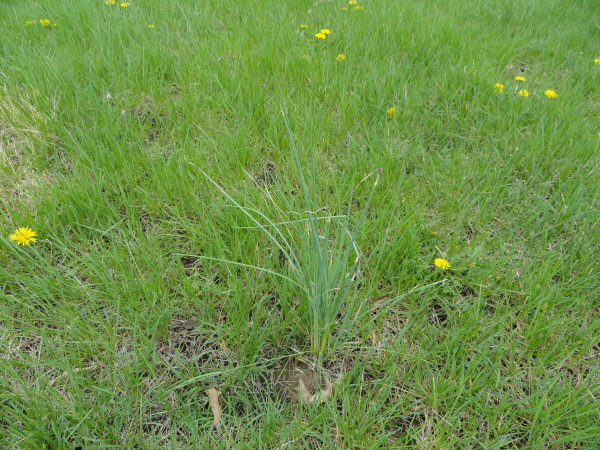
 The bulb of an Onion Weed plant gives off an onion-like scent when crushed or cut and an outbreak can be enough to make any lawn-lover cry.
A perennial, Onion Weed has been declared a noxious weed for most of southern Australia, including New South Wales, Victoria, South Australia, Tasmania, and Western Australia.
Onion Weed thrives in damp conditions and semi shade and is often found on roadsides and railway verges.
Interestingly, Onion Weed is classified as an edible weed: the stems and leaves have a mild spring onion or leek flavour, and the bulb has a mild garlic flavour. Each part of the Onion Weed plant can be used in cooking stir fries, soups and salads.
How to Identify Onion Weed
Apart from the distinctive smell, Onion Weed is distinguished by its tall, thin leaves and mostly white bell-shaped flowers that grow at the top of a long stalk.
Onion Weed seeds form in summer and autumn and are spread by wind, in soil and in water. Small bulbs develop from the main bulb and can produce new plants after the main bulb dies, making control difficult but not impossible.
Flowering indicates the Onion Weed bulbs are dividing and generating new plants.
How to Remove Onion Weed
There are two main ways to get rid of Onion Weed: mechanical and chemical.
Mechanical control of Onion Weed
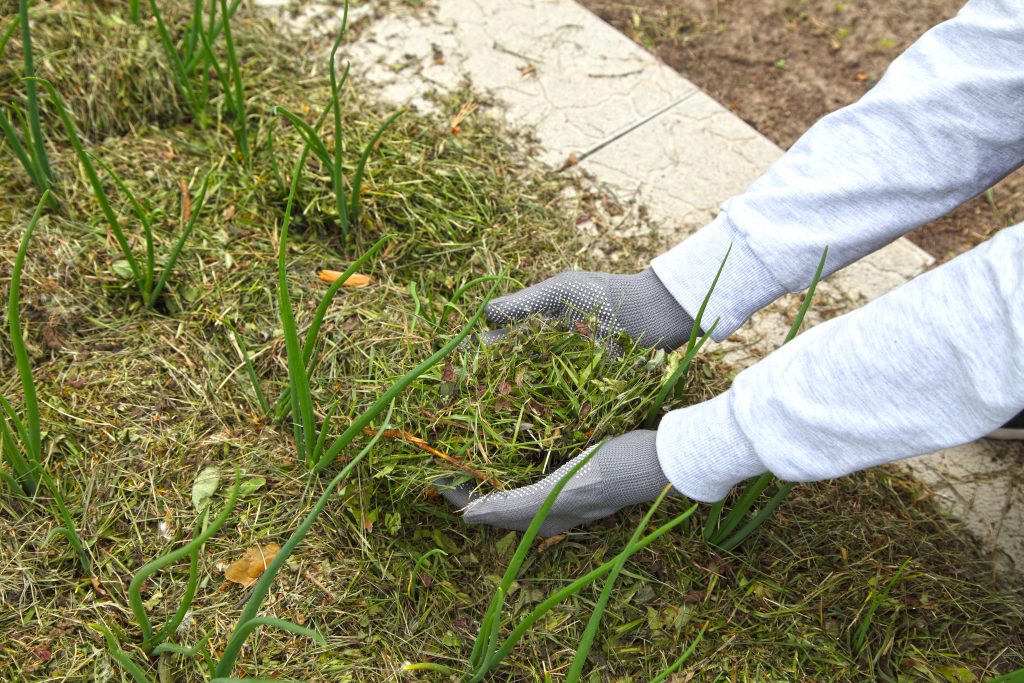 Trying to pull up Onion Weed can result in the main bulb releasing all the small bulbs. These are stimulated by the soil disturbance to produce a new plant.
The best way to get rid of Onion Weed is to stop the bulbs storing food for future growth. This can be done by repeatedly cutting or mowing the foliage to ground level.
Removing the leaves stops the plant from photosynthesising and creating seeds that can spread across your lawn. This weakens the main bulb, stops it from putting out small bulbs, and eventually will kill the Onion Weed plant.
Another method is to carefully dig up the clump, leaving a generous margin around the onion weed plant and making sure you go deep enough to capture all the small bulbs.
It’s also possible to kill Onion Weed because it will damage your lawn as well.
Chemical control of onion Weed
There are several herbicides on the market that are suitable for managing Onion Weed.
Depending on the maturity and size of plants, and how large an area is affected, it may be necessary for you to spray more than once.
Glyphosate can be effective on Onion Weed, but as a non-selective herbicide it will poison everything it touches, including the lawn. Use a weed wand, wick or brush for spot weeding.
Visible symptoms will appear in about a week, but treated weeds should not be disturbed for two weeks.
Selective herbicides, containing the active ingredient iodosulfuron-methyl-sodium, are much less dangerous to your lawn but can only be applied by a licensed professional.
Recommended Product
Tuffweed Liquid Glyphosate 1L
How to Prevent Onion Weed
Ensuring you have a strong, healthy lawn provides the best defence against infestation by weeds such as Onion Weed.
The appearance of Onion Weed can be a sign your lawn is in need of some more TLC, which might be as simple as applying a slow-release fertiliser.
Onion Weed prefers slightly acidic soils with a pH of about 5. Raising the pH to about 7 – a neutral level that suits most turf varieties and garden plants – will help make the environment less attractive to weeds.
You can test soil pH with a DIY kit available from nurseries and hardware stores, or you can send a soil sample away for analysis at a specialist laboratory.
You can increase pH by adding agricultural lime, dolomite or poultry manure. Another positive effect of boosting pH is the way it makes many soil nutrients more readily available to the lawn and plants you do want to grow.