
 Despite its name, there are no fairies to be found in Fairy Ring Lawn Disease.
This lovely sounding disease is actually caused by an abundance of organic matter in the lawn, which creates the perfect environment for fungus to grow, often creating rings of mushrooms in your lawn.
In this article, we’ll look at what causes Fairy Ring Lawn Disease, how it affects your lawn, and what you can do if mushrooms start appearing unexpectedly in your backyard.
What is Fairy Ring Lawn Disease?
If you’ve ever witnessed a ring of mushrooms popping up on your lawn, there’s a good chance that you have Fairy Ring Lawn Disease. Fairy rings are caused by a variety of fungal species – in Australia there are over 50 different species known to cause this disease.
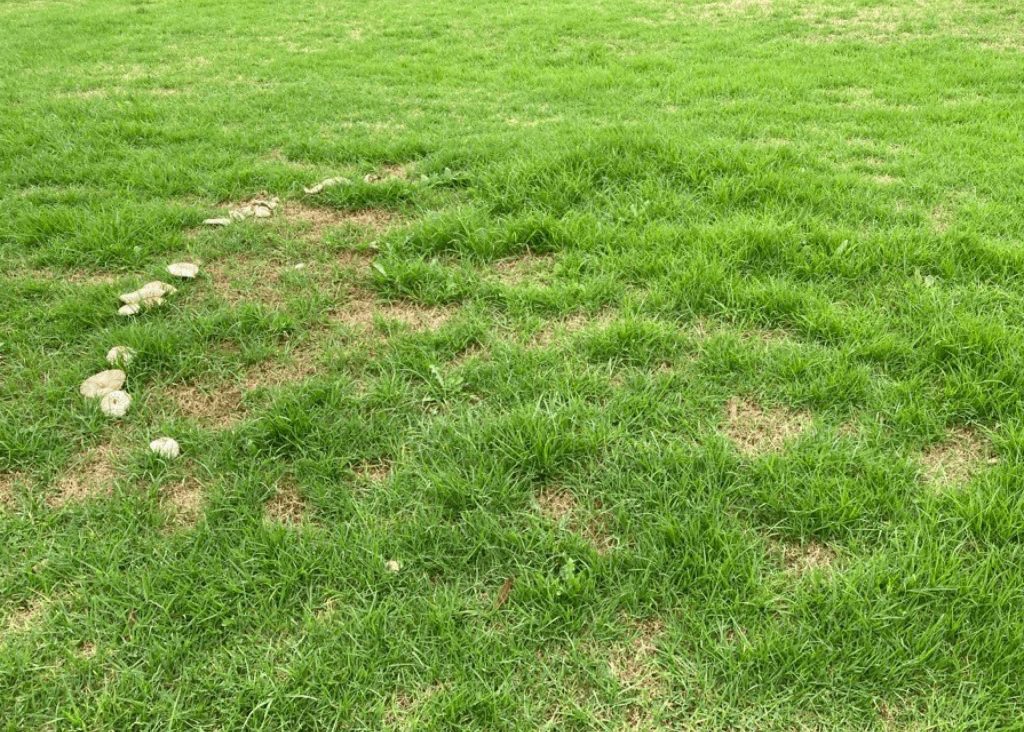 Fairy Rings can occur in all lawn types, and appear as circular rings of dark, or fast-growing grass, often with a ring of mushrooms or toadstools growing on the outer perimeter. The rings can vary in size, but it is not uncommon for rings to measure several metres in diameter. The dark, lush growth of the outer ring is caused by the nitrogen that is released when the fungi decompose organic matter.
Unlike many other fungal diseases, Fairy Ring does not directly attack the grass. Instead, the fungus alters the health of the soil in which the grass grows. Left untreated, the Fairy Ring Lawn Disease can cause moisture stress, as the mycelium forms a hydrophobic layer in the soil that prevents water from reaching the roots. Over time, the grass inside the ring can turn brown and die off.
Why do Fairy Rings occur?
Fairy Rings tend to form in soils that have low fertility and low moisture. These conditions are further exacerbated by lawns that have a significant thatch layer, as the organic content on the surface of the soil feeds the fungus and encourages the mycelium to grow into the soil.
How to Treat Fairy Rings
Most fungicides are ineffective at treating Fairy Ring Lawn disease – so managing the disease should focus on prevention. Fungicides may be useful preventatively, but seek advice from your local lawn expert on the suitability of preventative fungicide treatments for your specific conditions.
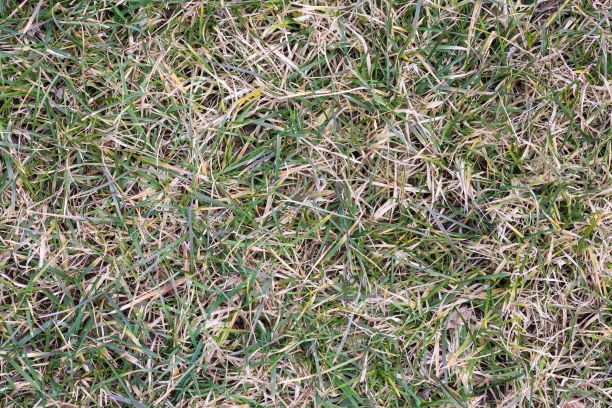 Maintain a healthy lawn with a regular regimen of maintenance to prevent the occurrence of this fungal disease. If you need to remove mushrooms, try to do so carefully to avoid spreading spores.
Mushrooms will commonly form where there is an accumulation of organic material, so you should manage any thatch on a regular basis. Remove thatch, and aerate your lawn regularly, to enable moisture and air to circulate through your soil.
Topdressing your lawn with a fine layer of high-quality sand can also dilute the amount of organic matter and provides a substrate for turfgrass root growth. Wetting agents may also help water to penetrate the lawn and reach the grass roots.
Recommended Products for Fairy Rings
Adama Bumper 625 1L

Bumper 1L liquid Fungicide is a quality control product for specific diseases found in Couch grasses. It has the highest concentration of Propiconazole, which may be useful in the prevention of Fairy Ring Disease.
Shop NowLawnPride HydraMaxx 5L Concentrate
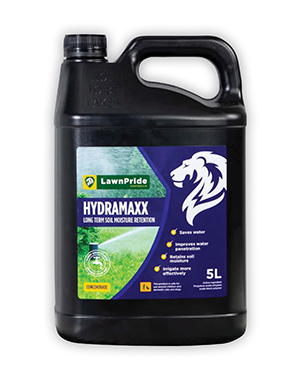
LawnPride HydraMaxx 5L Concentrate is an effective Soil Wetting Agent that is suitable for Zoysia, Kikuyu, Couch and Buffalo grasses. Active ingredients in LawnPride HydraMaxx 5L Hose On include wetter, surfactant and Propylene Oxide-Ethylene Oxide block polymer – which are all non-toxic water-soluble membranotropic surfactants.
Shop NowIn Conclusion
Fairy Ring Lawn Disease can often be an indicator that your lawn is in poor health. Caused by a range of fungi, Fairy Ring doesn’t directly kill your lawn – rather, it impacts the quality of your soils, making it hard for your lawn to thrive in optimal conditions. Once Fairy Ring takes hold, and mushrooms appear, there is little you can do to treat it, so you should prioritise maintaining your lawn by dethatching regularly, and making sure that your grass has the nutrition and maintenance it needs to thrive.
For more information on suitable products to manage your lawn health, visit myhomeTURF’s online store.


