 There are several types of Chickweed, a common herbaceous plant, that prefers cool, damp shady sites and can quickly take hold in your lawn during winter.
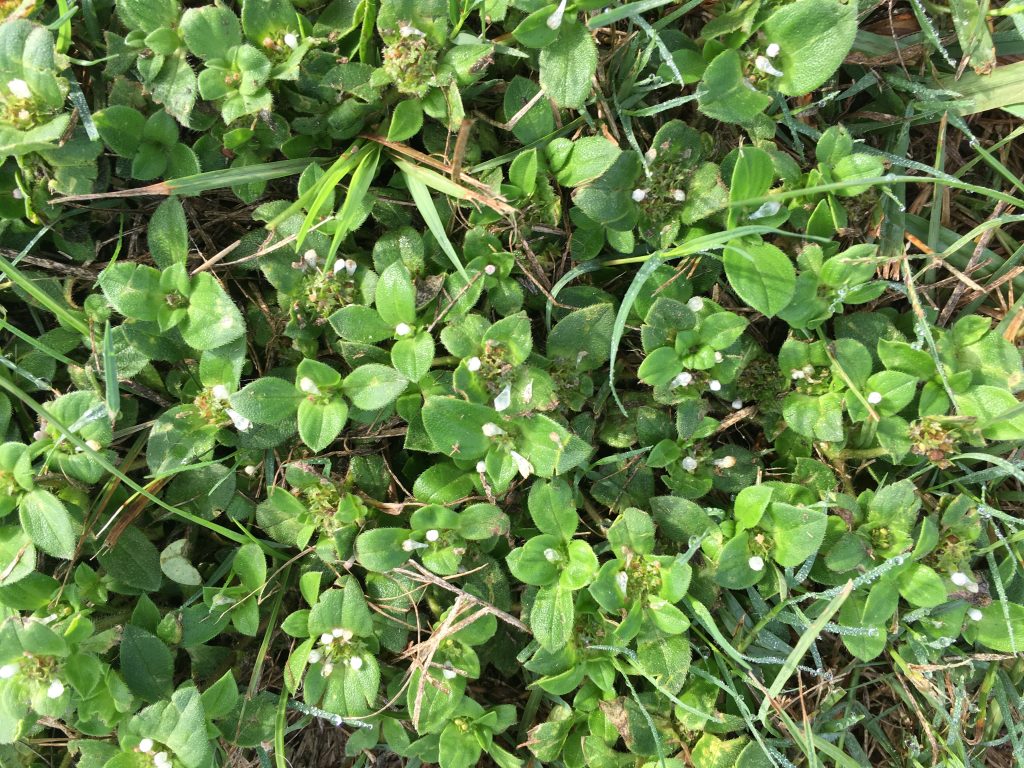
Mouse-ear Chickweed (Cerastium glomeratum) is an annual weed also known as Clammy Chickweed, Sticky Chickweed and Sticky Mouse-ear. It has soft hairy stems and small sticky hairy leaves paired along the stems.
Mouse-ear Chickweed flowers are small, white and grouped in dense clusters at the top of the stem, with five petals that may appear to be 10 petals. It produces small fruit (5-10mm long) with what looks like 10 teeth at the tip.
In this article, we’ll address ways to remove and control Common Chickweed (Stellaria media) in your lawn.
Also known as Winter Weed, Starweed and Chickenwort, Common Chickweed has a line of hairs along one side of the stem and simple, mostly hairless leaves.
Common Chickweed also produces a single flower on each stem which also has five white petals that are deeply lobed.
Interestingly, Common Chickweed stems, flowers, leaves and seeds are edible and can be eaten raw or cooked and it’s also sold dried, as tea, and used in herbal remedies.
How to identify Common Chickweed
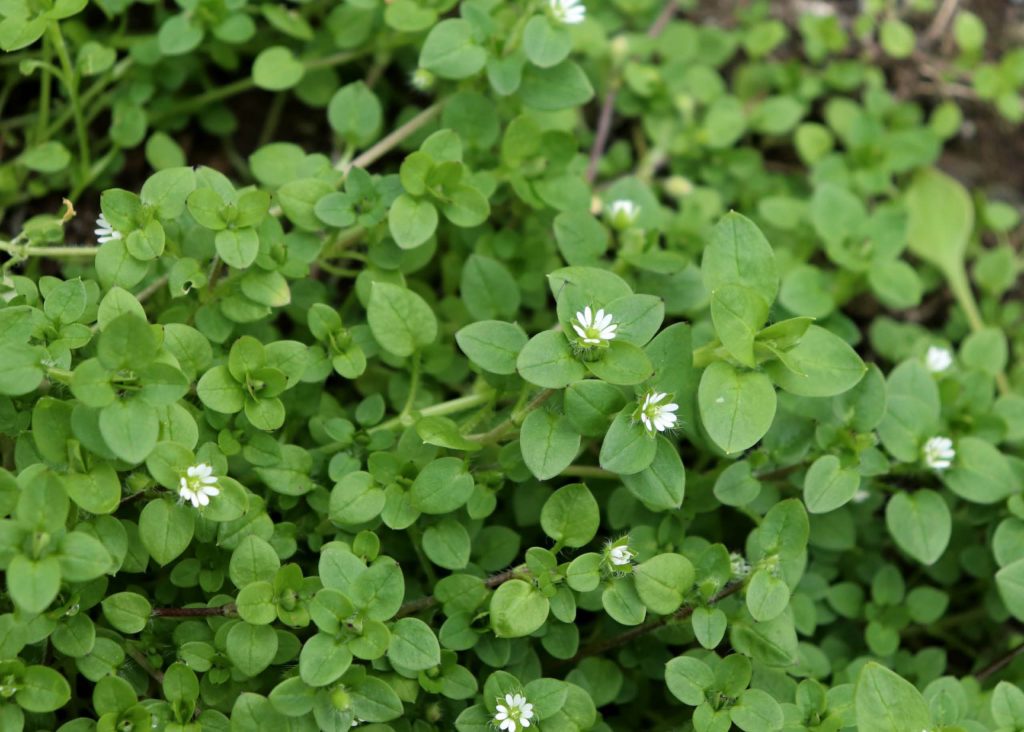 Chickweed is a sprawling weed of lawns, gardens, footpaths, farms and disturbed sites.
It has shallow fibrous roots, can flower quickly in infertile soils – as soon as four to five weeks after germination – and each Common Chickweed flower is replaced by a cylindrical seed capsule. This can produce mature seeds within five to seven weeks of the plant germinating.
Common Chickweed spreads by reseeding itself; it can also spread vegetatively by rooting at the leaf nodes along the stems.
The Common Chickweed seeds can be dispersed by wind, water, vehicles and mud.
How to control Chickweed
There are several methods of Common Chickweed control, so choose the one that best suits your situation.
Mechanical removal of Chickweed
Small individual Common Chickweed plants can easily be dug out using a sharp spade but be sure to leave a generous margin around the plant and under the roots. This is best done before the Common Chickweed flowers to avoid accidentally scattering seeds.
Cultivation
If the Common Chickweed has grown into a large, dense mat, more drastic action might be needed. This can include removal of the plants by hand – they’ll break off easily enough – followed by cultivation to ensure the roots and any leftover stems and seeds are well buried.
Common Chickweed seeds rarely germinate from depths of 20mm or more.
Mowing
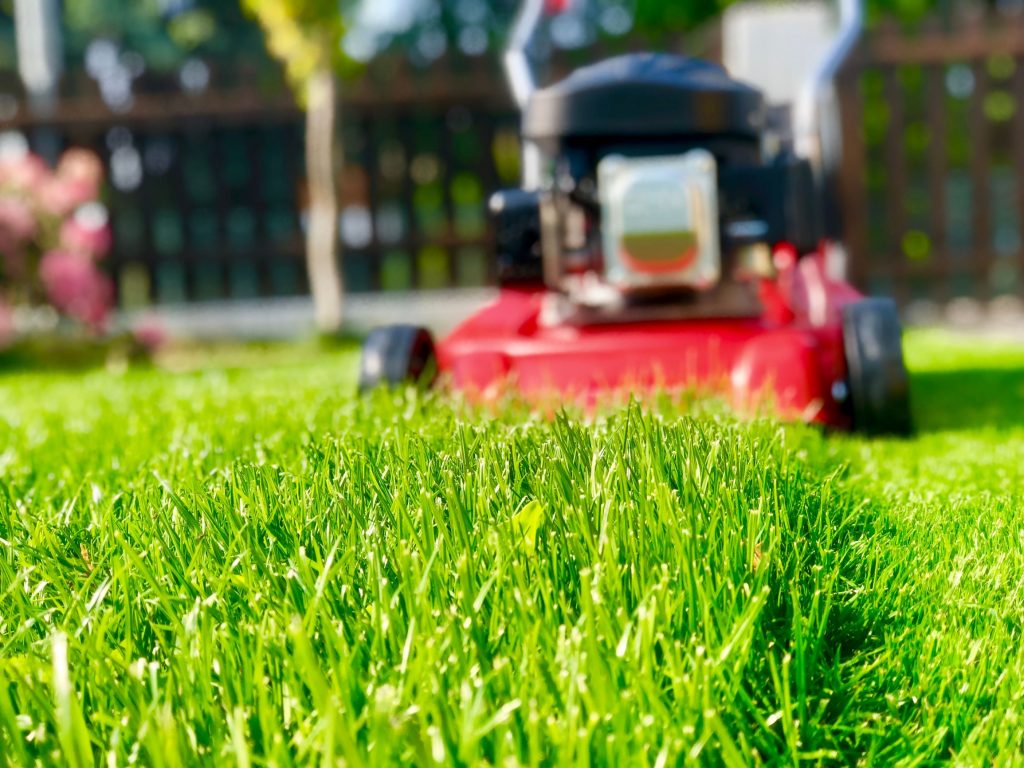 Common Chickweed doesn’t recover from the loss of its foliage, so pull up as much as you can by hand before flowering, and regularly mow that section of your lawn at a lower height to allow the grass around its time to recover.
Heat shock
Flame weeding, which involves passing a flame over a weed briefly to heat the plant tissue just enough to kill it, also works well on Common Chickweed. Take care you don’t do too much damage to your surrounding lawn.
Chemical removal of Chickweed
 Glyphosate can be effective on Common Chickweed, but as a non-selective herbicide it will poison everything it touches, including your lawn.
Overspray of glyphosate is especially toxic to Kikuyu and Buffalo lawns.
It is safer to use a selective herbicide. Look for products containing the active ingredients bromoxynil and MCPA (safe for Buffalo, Kikuyu and Zoysia). Products containing dicamba are not suitable for use on Buffalo lawns.
How to prevent Chickweed
Thin, weak lawns on poorly drained soils are at the greatest risk of infestation by weeds such as Common Chickweed.
Ensuring you have a strong, healthy lawn provides the best defence against a Common Chickweed invasion.
Eliminate wet spots in your lawn and lay geofabric under new garden beds to minimise the risk of Common Chickweed spreading from seeds in soil that’s brought in.
Recommended products
To prevent a recurrence of Common Chickweed, myhomeTURF recommends using OxaFert on your lawn in late winter or early spring.
Oxafert 20kg

OxaFert is a combination product containing both fertiliser and pre-emergent herbicide and will stop any Common Chickweed seeds from germinating. Always read the safety directions and instructions on the product label before use.
Shop Now