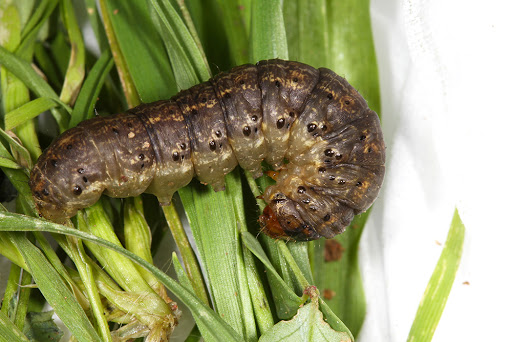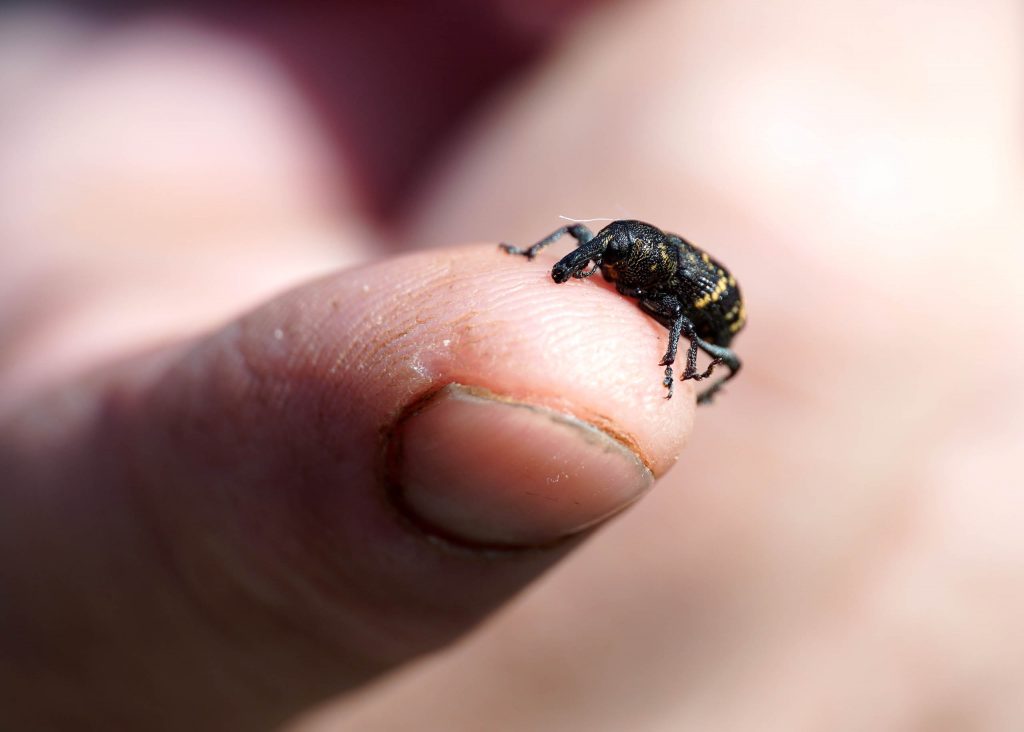
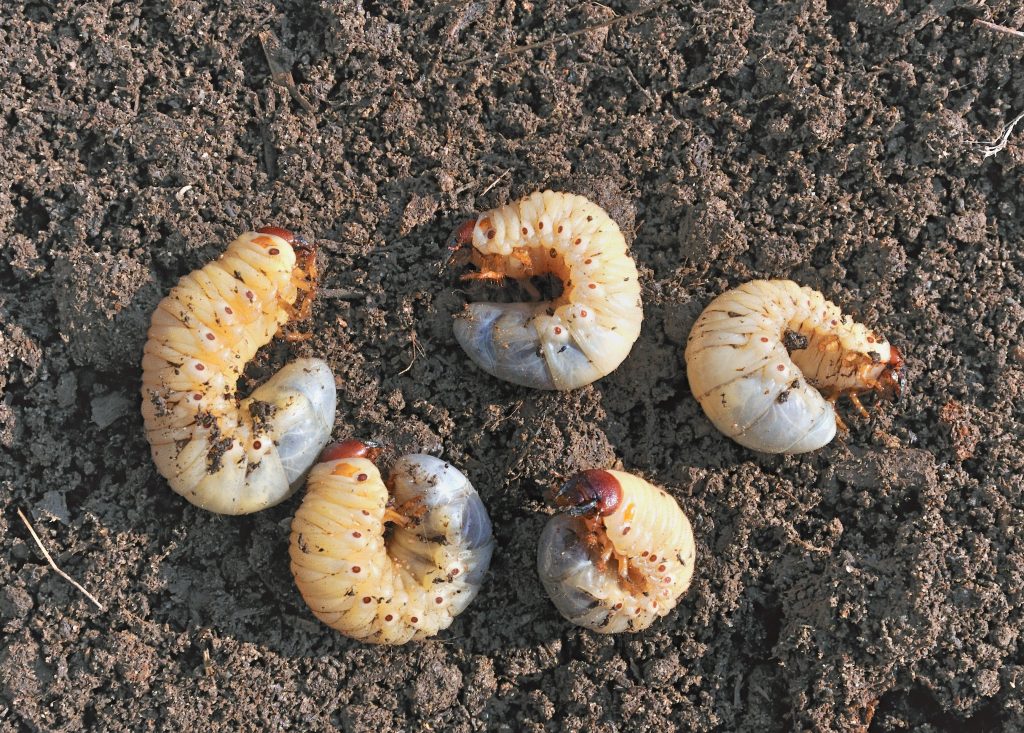
Like any soil-dwelling larvae that feeds on plant roots, White Curl Grubs can cause a lot of damage in a short time in lawns of all types.
Initial signs of damage include what looks like the drying out of leaf blades in irregular patches of lawn, even when the soil is moist.
As summer progresses, large dead patches will appear. Because the White Curl Grubs are severing the roots, you’ll find the lawn feels spongey underfoot and it is easy to pull up or roll back as you would a rug or carpet.
What Are White Curl Grubs?
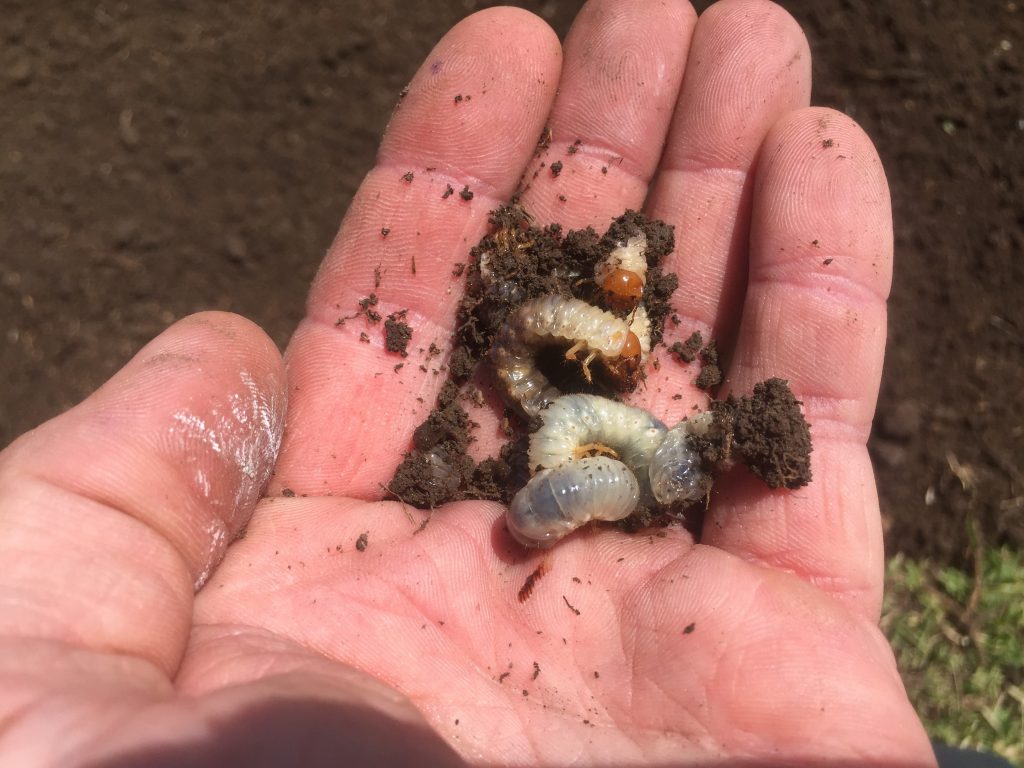
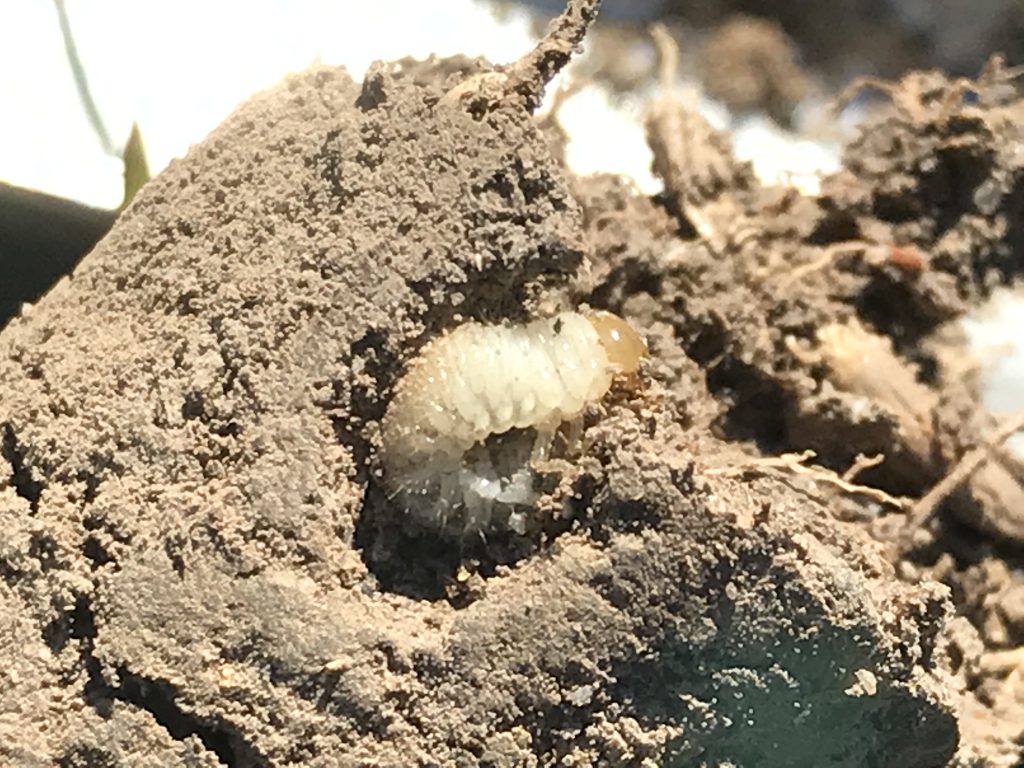
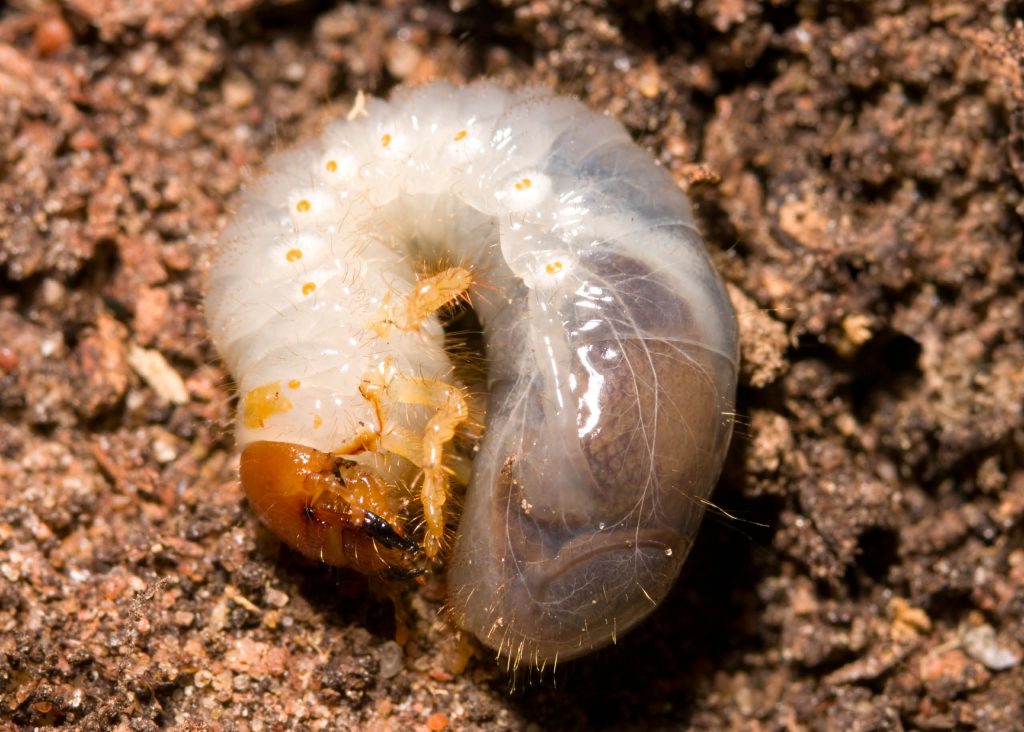 White Curl Grubs are the larvae of a number of different scarab beetles, including the African Black Beetle, and can vary in size from 15mm to 60mm long.
The larvae usually have a soft C-shaped pale cream or white body, with six legs and depending on the species, can have a small orange head.
They’re most active at night and often confused with Witchetty Grubs but they two are actually very different.
The White Curl Grub Lifecycle
New generations of White Curl Grubs appear after female beetles lay their eggs in the soil.
The eggs can lie in the soil for up to three years before hatching but usually hatch annually.
Once hatched, the larvae feed on plant roots and underground organic matter before pupating and emerging as adult beetles.
The best time to treat lawns and garden beds is in spring or summer.
How to Check for White Curl Grubs
 After watering your lawn for the day spread a tarpaulin, old carpet fragment, hessian bag, piece of cardboard, newspapers, or anything similar in a single layer over a patch of lawn.
Leave the layer on the lawn overnight, and lift it up off the lawn in the morning. If White Curl Grubs are present, you should see them on the surface when the layer is removed.
Another way to check for White Curl Grubs is to mix a very soapy bucket of water and pour it over an affected area of lawn. Watch for the next 10 minutes to see if any grubs come to the surface.
How to Control White Curl Grubs
One way of controlling White Curl Grubs without the use of harsh chemicals is to keep putting a wet hessian bag on the lawn overnight to draw them to the surface.
Collect and feed them to your chickens, if you have any, or toss them onto a paved area for wild birds to eat.
You could also drown the grubs in a bucket of soapy water before putting them into a plastic bag and in the bin.
Organic methods of controlling White Curl Grubs include products containing neem oil extract. Applied as a foliar spray or soil drench, these suppress the insect’s appetite and restrict it from being able to moult properly.
Neem oil products are safe for pets, birds, lizards and beneficial insects, including bees, but should not be used around ponds and in aquaponics as it can be harmful to fish. Some are not approved for use on edible plants, so always read the label first.
There are several insecticides available that are suitable for killing lawn beetles and grubs. Choose one that contains the active ingredient Chlorantraniliprole for long-term residual control.
Always read the safety directions and instructions on the product label before use.
How to Prevent White Curl Grubs
 Beetles and moths are drawn to lit doors and windows and outdoor lights.
Monitor numbers as an indicator of potential egg-laying activity.
It’s not unusual for a few White Curl Grubs to appear in a healthy lawn, but as long as you continue to care for it properly, it will recover from any damage caused by a small number of grubs.
However, a lawn that is stressed by heat or mowing too short will be much more susceptible to damage.
If you think you need a refresher on lawn care, you can read our Ultimate Turf Maintenance and Lawn Care Guide here.
And if you’re not sure that White Curl Grubs are to blame, or you’d like more information, read our guide to some of the most common lawn pests here.
Recommended Products
Acelepryn GR 10kg

Acelepryn GR 10kg provides unmatched granular seasonal control against seasonal Long Grub and Caterpillars in a single application. It is suitable for Zoysia, Kikuyu, Couch and Buffalo grasses.
Shop NowIndigo Rumbler 100SC 5L

Indigo Rumbler 100SC 5L is an effective broad-spectrum insecticide in a suspension concentrate formulation for controlling a range of worms, weevils, beetles, bugs, ants and termites. It is suitable for use on Zoysia, Kikuyu, Couch and Buffalo grasses.
Shop Now