
 Special care is needed during the establishment phase of a new lawn.
This includes ensuring your newly-laid turf receives enough water to keep it alive while it grows new roots and puts them into the soil underneath.
Until the roots are firmly established, and the grass is able to draw the moisture and nutrients it needs from the soil, it is relying on you to keep it alive.
This means you’ll need to pay extra close attention to your lawn for the first few weeks, giving it frequent bursts of water to make sure it doesn’t dry out and die.
Am I Watering My Lawn Enough?
 The first rule of watering new turf is to keep it damp, and that means evenly watering it several times a day, every day for up to a month.
This can be made easier or harder by a range of factors, including the climate, season, water restrictions, the drought tolerance of your grass variety and the ability of the soil to absorb and hold moisture.
If it’s sunny, hot or windy, the rate of evaporation – when liquid water turns into gas and disappears into the air – will be higher and you’ll need to water more often than if your lawn is in shade or the days are cooler, cloudy or rainy.
You’ll be able to tell if you’re getting it right because the lawn will stay green and keep growing. Should it start to brown off, you’ll need to bump up the volume and water longer or more often.
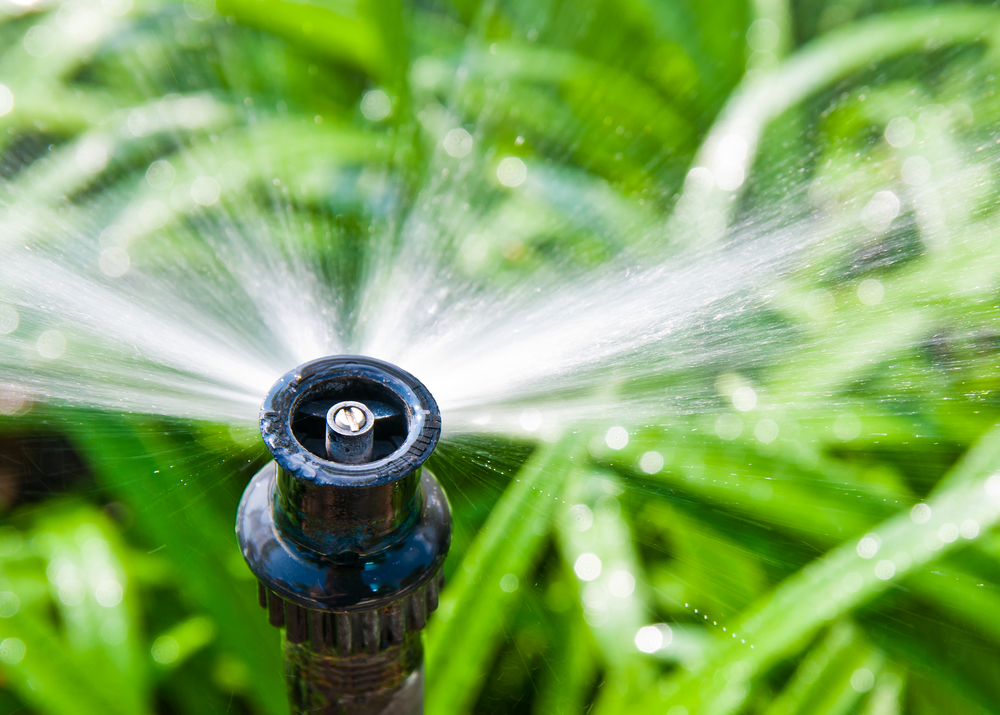
This is simple enough to achieve across large areas of lawn when you have a programmable automatic irrigation system, but is still possible when using moveable sprinklers or a hand hose.
Once your lawn has become established and is growing well, it’s time to replace frequent light watering with the standard once a week deeper soak.
Watering Freshly Laid Turf (Weeks 0-4)
If you’re having a professional lay your instant lawn, they will monitor it for moisture stress during the process and should leave you with a guide to caring for it properly.
If you’ve laid the rolls or slabs yourself, you’ll need to water your grass as soon as possible after laying, and keep it constantly damp by watering lightly up to three times a day, or even four times in mid-summer.
Avoid watering at night because this encourages the development of fungal diseases which can cause damage and hinder establishment of your new turf.
Watering Established Turf (Weeks 4-6+)
 If you’ve been carefully monitoring your new lawn and keeping the water up to it, you can check its progress by gently trying to lift a corner.
If it hangs on, it means the roots are growing into the soil and you can move to the next step: increasing how long you water it, while reducing how often it’s watered.
Gradually adjust watering times over a period of a few weeks until you’ve cut back to once a day, every second day, every third day etc… Eventually you’ll be giving it a deep morning soak of one to two hours once a week.
Signs Your Lawn Needs Water
Some people say talking to their plants keeps them happy, but you don’t need to learn a new language to have an enviable lawn.
Instead, make a habit of watching and listening to it and you’ll find your lawn will let you know when it’s time for the sprinklers to go on.
- Look for dry, wilting or yellowing blades of grass, or walk across your lawn and test how long it takes for the grass to bounce back into place. A well-hydrated lawn will quickly spring back into shape. If it sounds crinkly or your footprint leaves a mark, it might mean your lawn is overdue for a drink.
- In an established lawn, the accumulation of a thick layer of thatch or a patch of hydrophobic soil that repels water can cause pooling of water on the surface. This will stop water, nutrients and air from reaching the roots where they’re needed for the plant to stay healthy. Using a crystal or liquid wetting agent can improve water penetration and moisture retention.
- Watch out for areas of lawn that grow unevenly. This can be an indicator of over watering and/or under watering which can both affect the health of your lawn in different ways. Use a water audit to check your sprinklers are delivering a uniform volume of water across the lawn and there are no blocked emitters or unnecessary overlapping by sprayers.
How to Perform a Water Audit
Take a number of containers and place them randomly across your lawn. You can use catch cups, which are available from hardware and irrigation suppliers, or bowls, cups or other kitchenware items with a wide top.
Make sure there’s one or more in any areas you have questions about whether they’re being underwatered or overwatered.
Run your sprinklers for 5-10 minutes and measure the depth of water in each container. The volume doesn’t matter but the depth should be fairly even.
If not, adjust the direction and output of the sprinkler heads to make sure they’re delivering a similar amount of water across the entire lawn.
You might also need to tweak the timing of automatic systems to ensure they’re delivering enough water, but not too much.
Frequently Asked Questions
Can I Over Water New Turf?
 A freshly-laid lawn needs more water but yes, it is possible to give it too much.
Waterlogging will drown the roots and stop them from growing into the soil, causing the grass blades to wilt and die off.
If the grass feels spongy, lift a corner and check underneath. If you can’t lift it that’s a sign the roots have grown into the soil and the grass is salvageable.
Make sure the soil is moist, but not muddy, and the roots are healthy, not brown or rotting.
If you identify overwatering early and adjust how often or how much you water, it is possible to save the turf.
How Much Water Should I Use?
How much water you use on an established lawn will depend on soil type and how much moisture it holds.
Sandier soils which allow moisture to drain away quickly will need more water than soils with a higher clay content that are better at holding onto moisture.
Try giving your lawn a thorough soaking and sink a shovel into the ground afterwards. Twist the shovel to open up a hole and check how far down the profile the moisture has penetrated.
The aim is to irrigate long enough so the water can reach a depth of 150mm.
How Long Should I Leave the Sprinklers On?

Once you’re happy the lawn is being watered evenly, use the catch cups or containers from your water audit to check the depth of water applied during a 10 minute period.
Multiply that by six and it will tell you how much water your lawn will receive in an hour. So 5mm in 10 minutes equals 30mm an hour.
If that’s enough to push the water to that 150mm depth, which ensures it reaches well into the root zone, you can safely set your timers.
Watering deeply once a week after your new lawn is established will encourage the grass to grow stronger, deeper roots and make it less vulnerable to drier conditions.
When water restrictions are in place, it becomes even more important to water wisely.
You can check the Bureau of Meteorology website here to see if your area is affected and read our Lawncare During Water Restrictions guide here.
What’s the Best Time of Day to Water?
Avoid watering your lawn late in the evening or at night because this can encourage fungal diseases.
The best time to water is always early in the morning, between 5am and 9am. This gives your lawn time to dry out during the day, reduces losses from evaporation and prevents scalding during the heat of summer.
Of course, if it’s raining you should interrupt the automatic irrigation schedule or skip the session on the hose – it will be a waste of time, money and water, and keeping your lawn too wet for too long can encourage disease.
Recommended Products
myhomeTURF highly recommends using a Soil Wetting Agent when you lay new turf or before summer when prolonged dry conditions are likely.


 Shade
Shade Maint.
 Drought
 Wear
Wear $12–$18/m²