
 A beautiful green lawn is a natural invitation to relax, play and spend time outdoors.
However, ensuring your lawn stays healthy requires effort and a lawn care routine, which includes regular mowing, aeration and thatch removal, application of fertiliser and deep, infrequent watering.
Lawn mowers are essential tools for lawn maintenance, but can spread fungal diseases, causing damage and unsightly patches which can take time to treat and repair.
In this article, we’ll provide insights on how to prevent your lawn mower from spreading fungus.
Common fungus spread by a lawn mower
 Fungal diseases in lawns are caused by an imbalance of different types of fungi in the soil or grass.
In many cases, they appear as discoloured spots or thinned out patches, and are a sign that you haven’t been caring for your lawn properly.
Four of the most common fungal diseases are: Brown Patch, Pythium, Leaf Spot and Dollar Spot.
- Brown Patch causes irregular discoloured patches on the lawn and often occurs in summer, when humidity is high.
- Pythium often appears first as small patches of grass that appear water-soaked and a dark purplish colour and feel slimy to touch.
- Leaf spot, also known as Black Spot, causes dark spots, mould and growths that look like cobwebs during warm, humid weather.
- Dollar Spot appears as small sunken straw or tan spots on the lawn, usually in autumn and spring when days are warm, humidity is high, and nights are cool.
If you notice any of these signs, it’s important to take action quickly to prevent the spread of the disease. This may include applying fungicides, removing diseased plants, and adjusting your lawn care practices.
Signs your mower is spreading fungus
Poor lawn mower hygiene can be responsible for spreading fungal diseases in the lawn.
To avoid future outbreaks of fungal disease, follow the steps outlined in our Ultimate Turf Maintenance and Lawn Care Guide.
Signs your mower is the culprit include: fungal spores collecting on the mower deck, grass or fungus caking the wheels, and grass clippings being left behind after mowing.
Other lawn care tools such as boots, weed eaters and gloves can also spread fungus.
How to prevent your lawn mower from spreading fungus
 You’ll need to be proactive to stop your mower from spreading fungus across your lawn.
First, identify the type of fungus involved, the likely causes and the best treatment. There’s a guide to Common lawn diseases here.
The three main rules to follow are:
- Only mow your lawn when it’s dry. Spores are more easily spread when grass is wet.
- Don’t run the mower over dead or diseased areas – it will carry disease into healthy parts of the lawn.
- Clean your mower after each use to remove grass clippings and debris that could harbour fungal spores.
Make sure the mower engine is cold, disconnect the spark plug and check the throttle is in the off position. Start by hosing off the mower deck, then spray the underside with an all purpose cleaner and use a stiff brush and hot water to scrub off any dirt and grime. Allow to dry fully before using again.
Other lawn care tools such as boots, gloves, string trimmers and brush cutters also should be cleaned after each use to prevent the spread of fungal diseases.
Using fungicides
Fungicides can be used to control fungal diseases in lawns.
Some fungicides are designed for specific types of lawns, such as cool-season or warm-season grasses, so it’s important to read the label instructions carefully before application to ensure the product is safe and effective for use on your type of grass.
Recommended Products
Indigo Voltar GT 250 5L
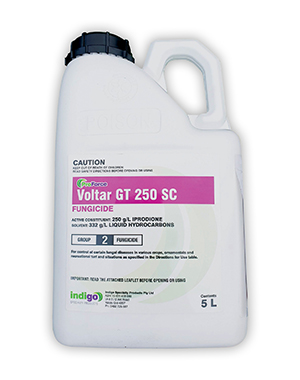
Indigo Voltar GT 250 5L is a broad-spectrum fungicide containing the active ingredient iprodione (250g/L) and is suitable for Zoysia, Kikuyu, Couch and Buffalo grasses.
Shop NowAdama Bumper 625EC 1L

Adama Bumper 625EC 1L contains the active ingredient propiconazole (625g/L) and is suitable for use on Couch grasses.
Shop NowSyngenta Posterity Turf 500mL

Syngenta Posterity Turf 500ml contains the active ingredient pydiflumetofen (200g/L) and is suitable for Zoysia, Kikuyu, Couch and Buffalo grasses.
Shop NowSureFire Chlortan 720 1L

SureFire Chlortan 720 1L contains the active ingredient chlorothalonil (720g/L) and is suitable for Zoysia, Kikuyu, Couch and Buffalo grasses.
Shop NowIndigo Tombstone Duo 500mL

Indigo Tombstone Duo 500ml contains the active ingredients tebuconazole (200g/L) and trifloxystrobin (100g/L) and is suitable for Zoysia, Kikuyu, Couch and Buffalo grasses.
Shop NowYou can browse these and other fungicides in the myhomeTURF online shop.
When to apply fungicide
The best time to apply fungicide will depend on whether you’re using a contact fungicide or a systemic fungicide.
It is usually early in the morning – before bees are foraging – and more than 24 hours before rain is expected.
 The spray must be able to dry, but avoid spraying when it’s windy or conditions are otherwise likely to encourage spray drift onto fruit and vegetable gardens.
It might be necessary to spray more than once if conditions favourable to disease persist, but don’t use the same product each time.
Always read the product label and follow its instructions for application and safety precautions. Some fungicides registered for turf diseases are not permitted for use in the home garden.
There’s more information about the best time to apply fungicides here.
Conclusion
Maintaining a healthy lawn requires regular lawn care practices such as mowing.
However, your lawn mower can also spread fungal diseases, so it’s important to take proactive steps to prevent this from occurring.
Be vigilant for signs of disease and take action quickly to prevent it from spreading.
This may include applying fungicides correctly and at the right time, removing diseased plants, and adjusting your lawn care practices to include stricter hygiene for all lawn care tools.