
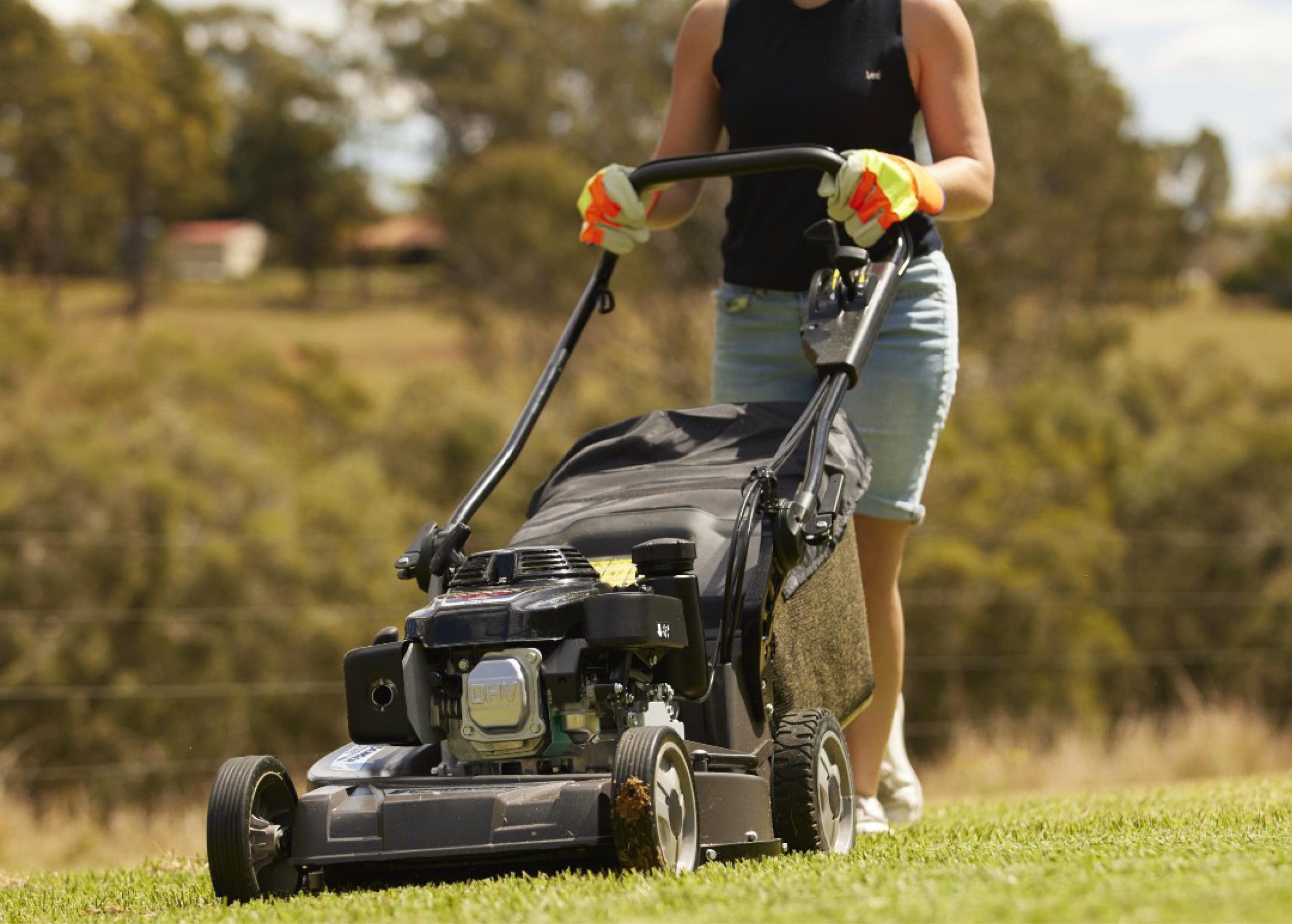
 Lawn mowers are essential tools for keeping your lawn looking tidy and well-manicured.
Regular mowing also helps keep grass healthy by removing damaged or diseased grass and encouraging new growth to take its place, reducing the risk of pest and fungal outbreaks.
But deciding which lawn mower to buy can be difficult because there’s so many to choose.
In this article, we’ve broken down the pros and cons of self-propelled mowers, the features to look out for and highlighted some important considerations when shopping for a new mower.
What are self-propelled lawn mowers?
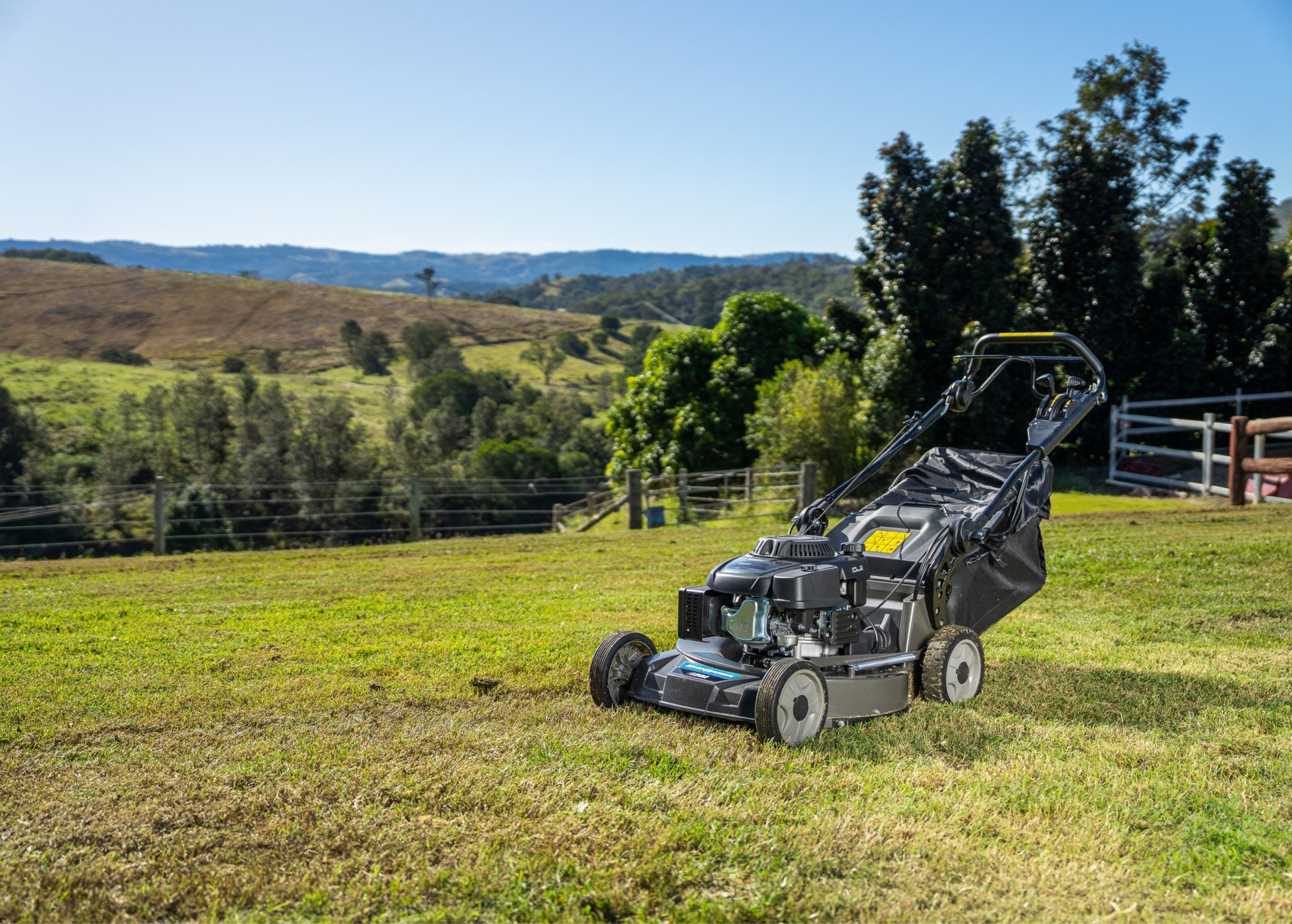 As the name suggests, self-propelled lawn mowers move under their own steam with you guiding them in the right direction.
Most are rotary mowers, which have one or more spinning blades under the cutting deck that cut the grass.
They are powered by engines running on two or four stroke petrol, or you can choose corded or battery electric models.
Self-propelled lawn mowers are suited for relatively level yards up to 1000 square metres (or the old quarter acre block) in size.
If your lawn area is bigger than 1000 square metres, or you get fatigued when mowing, you might prefer a ride-on mower.
Self-propelled lawn mowers have several advantages over push mowers which rely on you to move them around your lawn.
Advantages of self-propelled lawn mowers:
- Ease of use: Because the mower does the work of pushing itself forward, you don’t have to exert as much effort to mow your lawn. This can be especially helpful if you have a large lawn or if you have physical limitations or a disability that makes it difficult to push a heavy mower.
- Efficiency: Because self-propelled lawn mowers do more of the work for you, you can mow your lawn faster and with less effort.
- Cutting experience: Because the mower is doing the work of pushing itself, you can focus on steering and cutting the grass, which can result in a cleaner, more even cut.
However, self-propelled lawn mowers also have some disadvantages:
- Expensive: Because they have more complex drive systems, self-propelled lawn mowers are generally more expensive than push mowers.
- Heavier: The added weight of the self-propelled drive system can make the mower more difficult to manoeuvre, especially in tight spaces or on hills.
- Maintenance: The self-propelled drive system has more parts that can wear out or break, which means you may need to perform more maintenance on your mower.
- Not suitable for all lawns: If you have a very small lawn or a flat, evenly manicured lawn, a push mower may be adequate. In these situations, a self-propelled mower can be overkill.
Choosing the best self-propelled mower features
When shopping for a self-propelled lawn mower, there are several features you may want to consider:
- Engine size and power: A larger engine will be able to handle thicker grass and hills more easily, but it will also be heavier and more expensive.
- Cutting width: A wider cutting width will allow you to cover more ground in less time, but it will also be more expensive and may not be as easy to manoeuvre in tight spaces.
- Cutting height: Look for a lawn mower that offers a range of cutting heights so you can adjust for different grass lengths and conditions.
- Drive system: There are three main types of drive systems: rear-wheel drive, front-wheel drive, and all-wheel drive. Consider which type would be best for your lawn and terrain.
- Ease of use: Choose a mower with single pull start and automatic choke, or push-button electronic ignition to make starting the mower a breeze.
- Bag or mulch: Some lawn mowers have the option to either bag the grass clippings or mulch them back into the lawn. Consider which option would be more convenient for you and most suitable for your grass type.
- Weight: A heavier lawn mower will be more difficult to manoeuvre, but it may also be more durable and able to handle tougher or longer grass.
- Price: Determine your budget and look for a lawn mower that offers the features you want at a price you can afford.
- Warranty: Consider the length and terms of the warranty offered by the manufacturer. A longer warranty may provide peace of mind and could save you money in the long run.
If you’re not sure a self-propelled mower is what you need, take a look at our complete Lawn Mower Buyers Guide here.
Lawn clippings
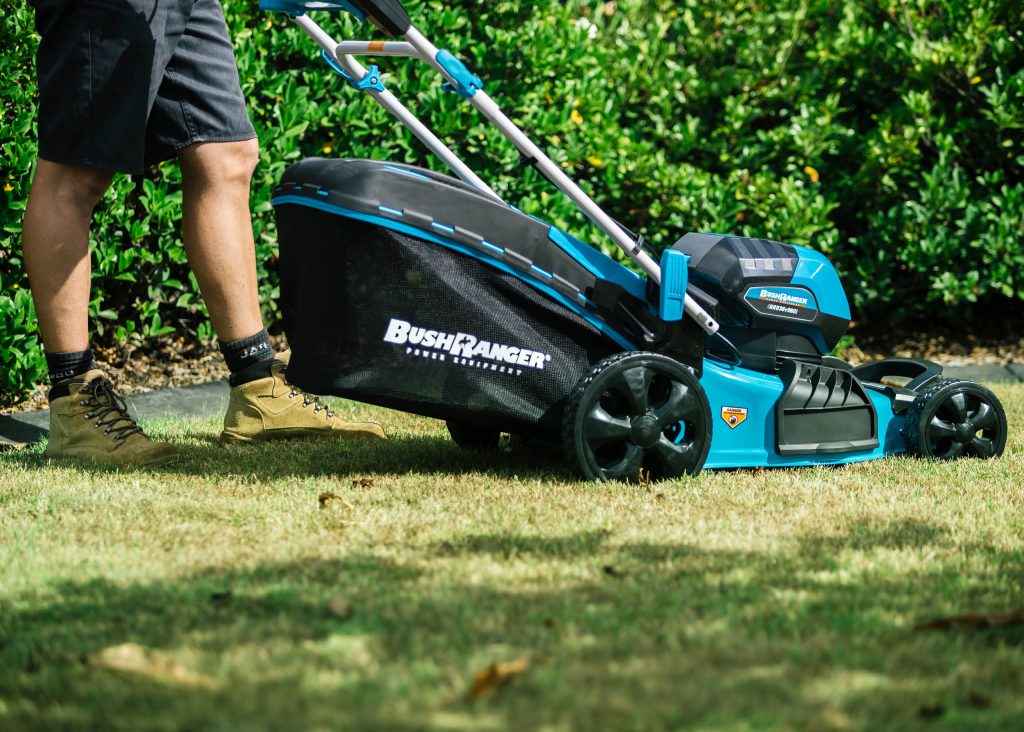 Most mowers can be fitted with a catcher that collects lawn clippings to make it easier to put them in a compost bin or trailer for disposal at the dump.
Catchers and bags can be fitted to the side or rear of your mower, but rear mounted catchers are easier to manoeuvre into corners and around obstacles in the yard.
If you prefer to leave your clippings on the lawn, look for a mulching mower, which has blades that cut the grass into very small pieces before spitting it back out. This is best used on finer grasses, such as Zoysia or Couch.
Not sure whether to leave grass clippings on your lawn? Read this article
General mowing guidelines and tips
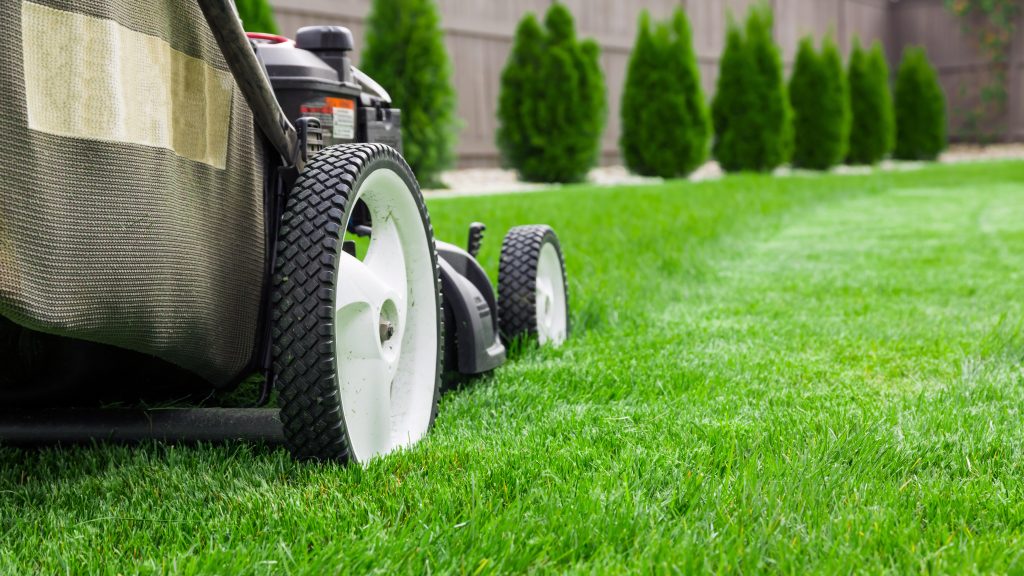 Whatever type of mower you choose, ensure it performs at its best by following the manufacturer’s operating instructions.
Always wear protective boots and safety glasses when mowing and never touch the blades or engine parts while a mower is running.
Regular maintenance will ensure your mower lasts longer and keeps your lawn looking amazing.
You can read our guide to lawn mower maintenance and troubleshooting here.
Mowing heights
The general rule of thumb for mowing your lawn is to cut only one third of the leaf each time, and adjust cutting height to the seasons.
During summer, when your lawn will be growing at its fastest, you can cut a little closer to the ground. Try to avoid scalping which puts your lawn under stress and can make it prone to disease, weed or pest outbreaks.
In winter, your lawn should be allowed to grow a little taller to provide insulation against the cold for the roots.
Optimum height and mowing intervals differ between grass types and whether they’re exposed to sun or shade. There’s a guide to the best mowing heights for Buffalo, Zoysia, Kikuyu and Couch lawns here.