
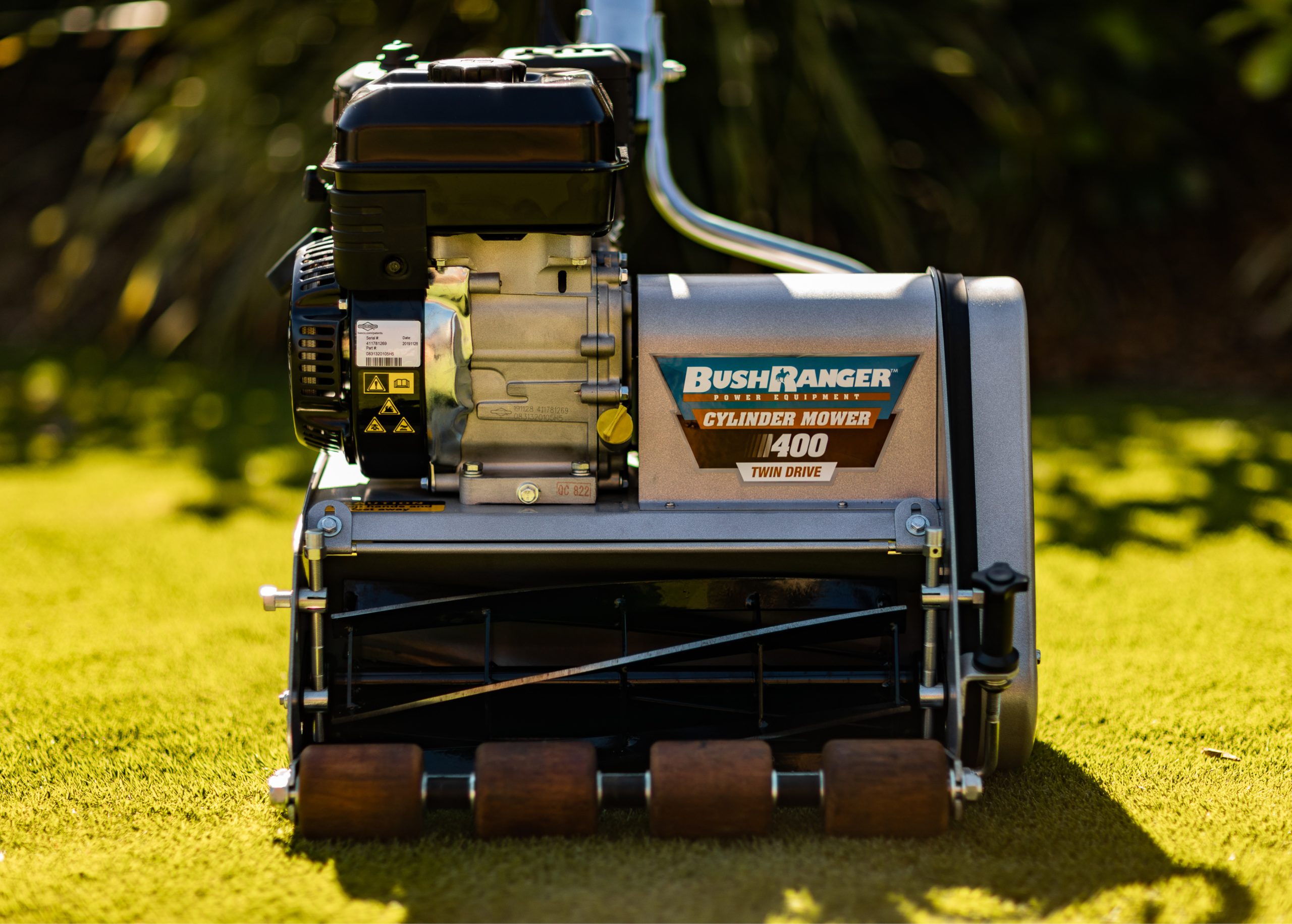
 Cylinder mowers are kinder to your lawn than the more common rotary mower.
Their scissor action produces a cleaner cut than other types of lawn mowers which is less damaging for the grass, and they’re perfect for producing crisply defined stripes.
In this article, we’ve broken down the pros and cons of cylinder mowers, the features to look out for and highlighted some important considerations when shopping for a new mower.
What are cylinder mowers?
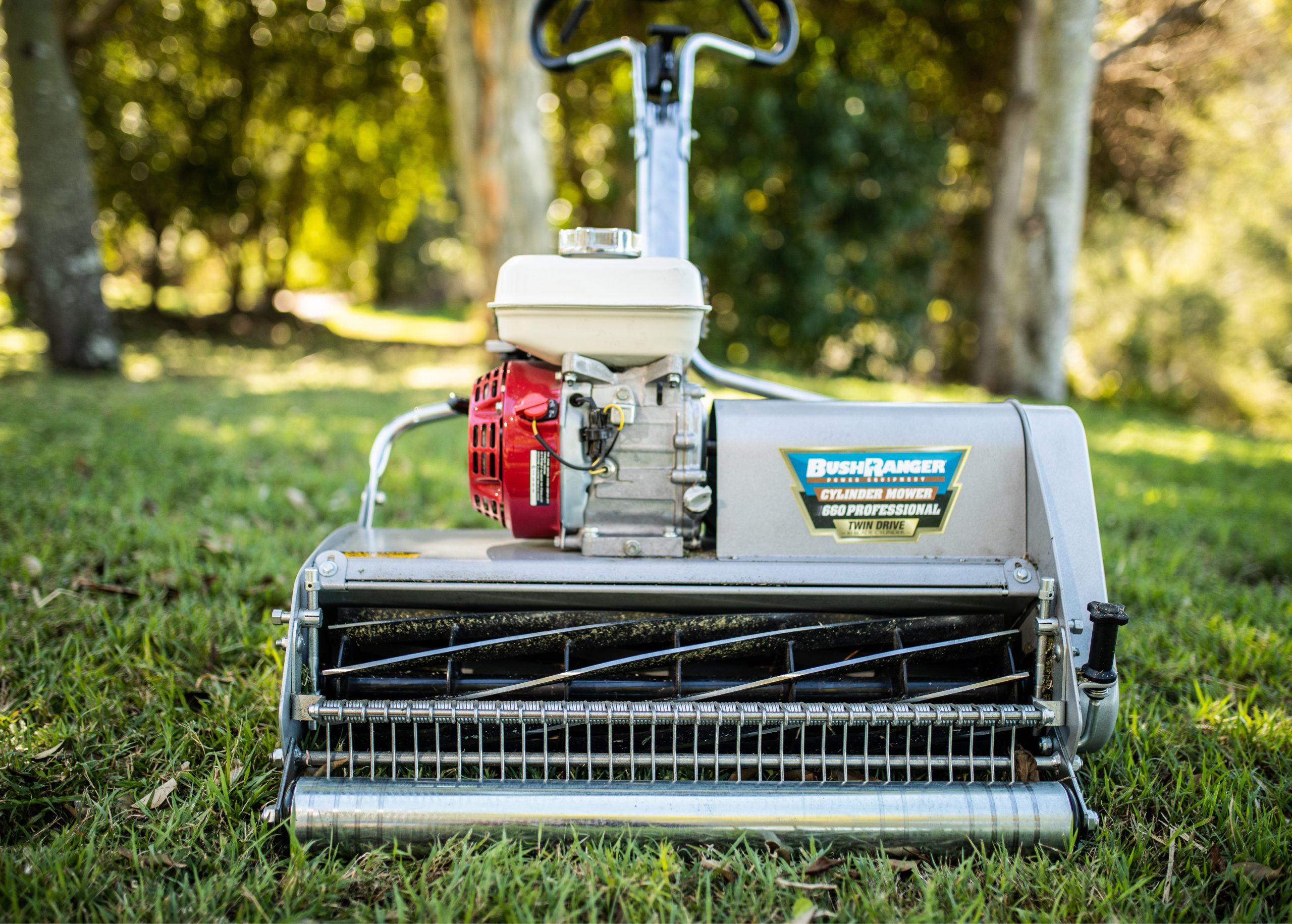
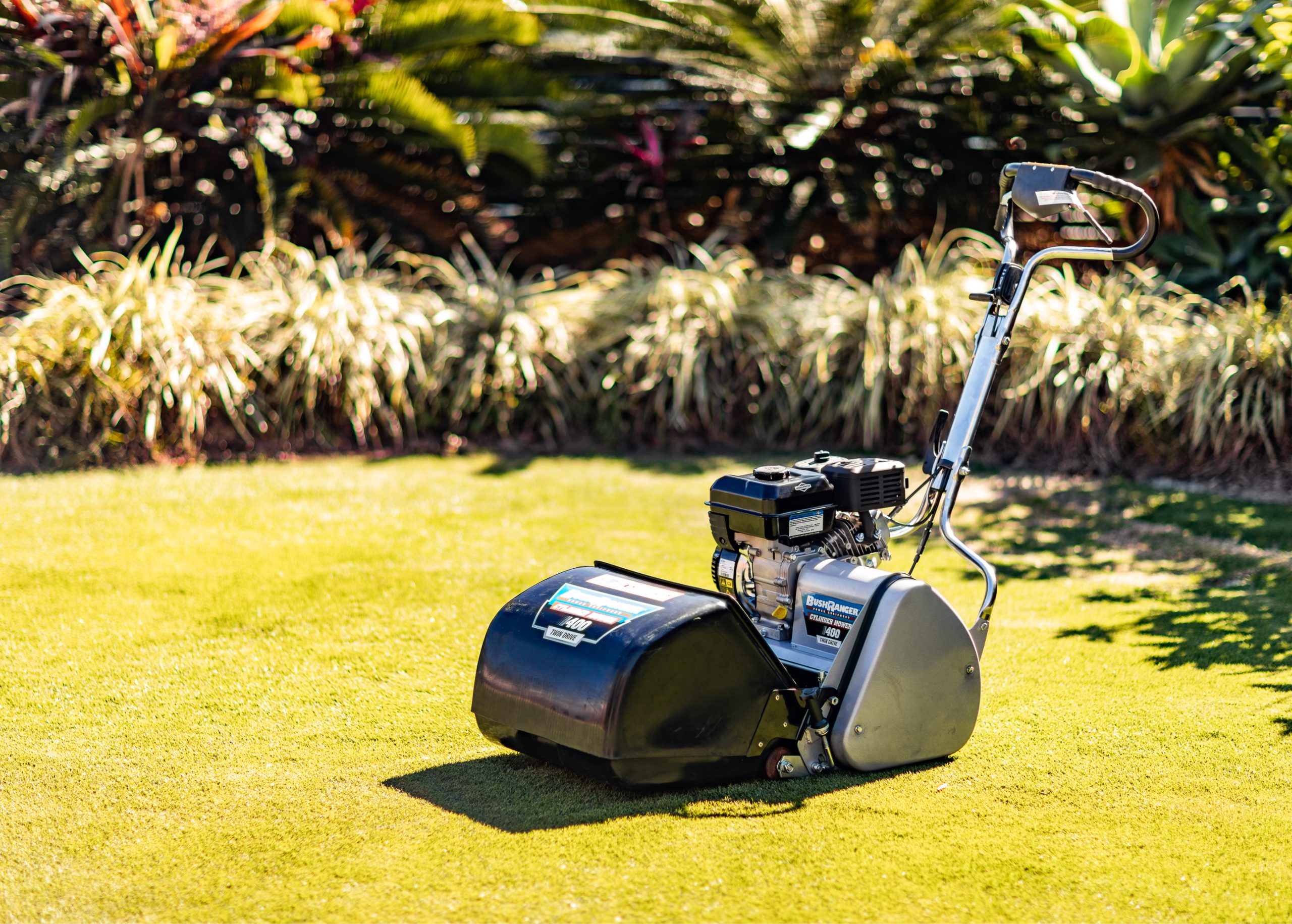 Cylinder mowers are a diffent type of mower than the usual manual push mower. Instead of having blades that spin on a vertical access underneath the cutting deck, cylinder mowers have 5-12 horizontal blades fixed to a cylinder which rotates vertically.
The blades at the front of the machine cut against a fixed bottom plate known as a bed knife, acting much like a pair of scissors or guillotine.
Grass clippings are caught in the front-mounted catcher.
Cylinder mowers are able to cut more cleanly – the more blades the better the cut – and lower than rotary mowers, without accidentally scalping your lawn, which is where they shine.
Large versions are often used on sports grounds and golf course and bowling greens to deliver a fine appearance and a surface that allows balls to travel true and fast.
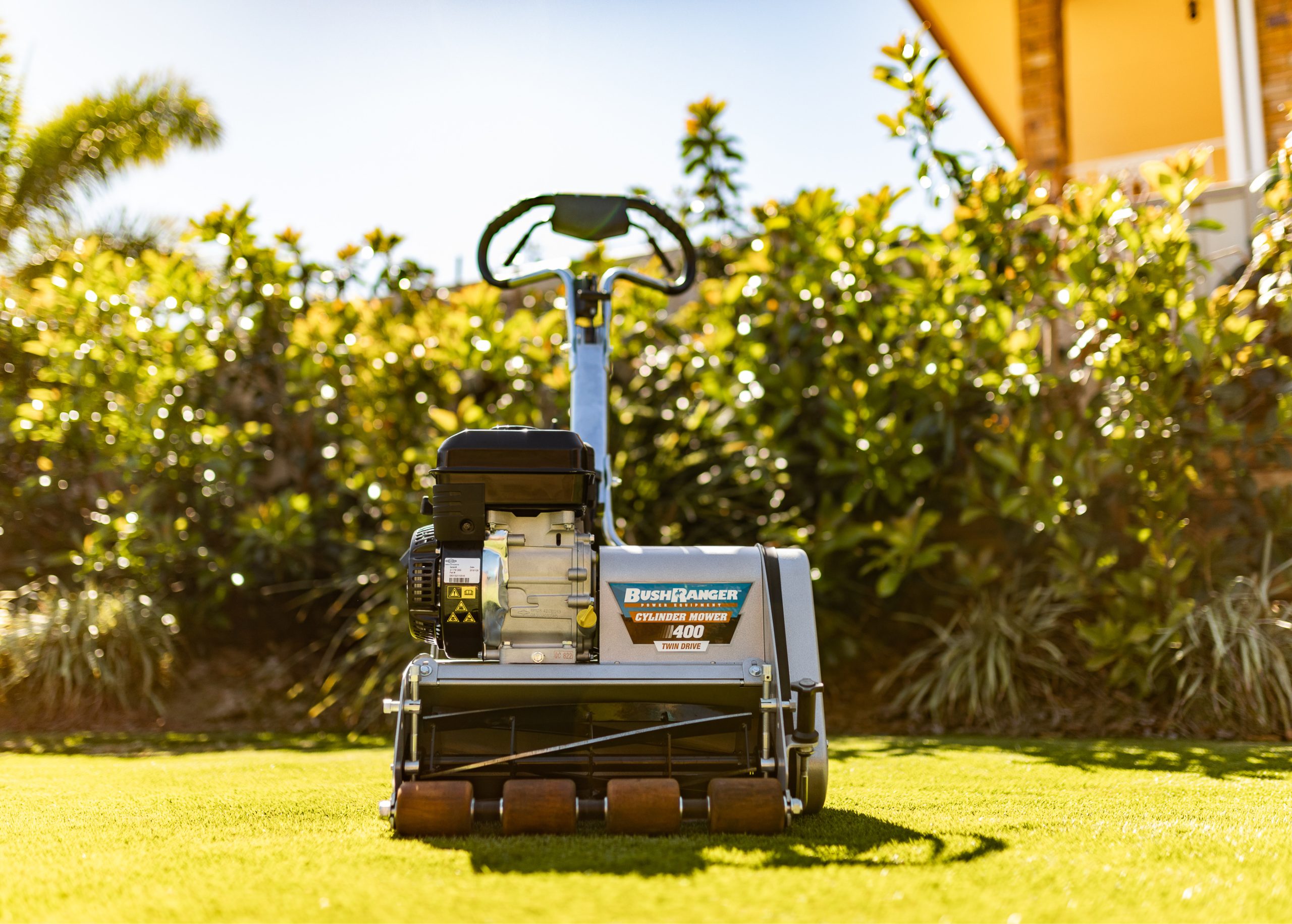 Cylinder mowers can generally cut from 2mm to 35mm, but some can be fitted with custom rollers allowing them to cut at heights up to 50mm.
Some machines can also be converted to a groomer, verticutter, scarifier or sweeper by swapping cassettes.
They also come with a rear roller instead of wheels that allows creation of strong, clear stripes and helps reduce soil compaction and thatching.
If you’re not sure a cylinder mower is what you need, take a look at our Lawn Mower Buyers Guide.
Things you’ll need to consider:
- Grass type – Understanding the optimum height for your grass type will help you decide whether it’s realistic to use a cylinder mower. Couches can be cut at 5-30mm. The sweet spot for cutting Zoysia is about 10-20mm, while Buffalo, Kikuyu, Carpetgrass and tall fescue lawns prefer 30-50mm.
- Mowing frequency – Cylinder mowers struggle to cope with tall grass, so you might have to mow as often as two or three times a week in summer to keep your lawn manageable.
- Lawn size – Manual push mowers are suited to smaller lawns, up to 500 square metres in size. For bigger lawns, look for a motorised or self-propelled cylinder mower to make yard work faster and easier.
- Terrain – Cylinder mowers are best suited to a lawn that is flat, uniform and has no gravel or stones.
Choosing the best cylinder mower features
Starting systems: Look for a cylinder lawn mower that is easy to start, has comfortable handles, and is easy to manoeuvre. Consider features such as self-propelled models, which take the effort out of pushing the mower, and electric start models, which make it easy to start the mower with the push of a button.
Voltage: Electric lawn mowers with higher voltage batteries allow the motor to run longer and cut more grass at a time. Lithium-ion batteries generally hold a charge for longer than rechargeable lead-acid batteries, but lead-acid batteries are considered more resistant to corrosion. With regular maintenance, a battery can last for three to five years.
Engine torque measures: Torque is the amount of power produced by the lawn mower engine. More powerful engines can handle thicker grass and uneven terrain with ease, but are louder and more expensive to operate.
Cutting width: The cutting width of a lawn mower refers to the width of grass the mower can cut with each pass. A wider cutting width means you’ll be able to cover more ground in less time, but these mowers will be more expensive and heavier. Consider the size of your lawn and your budget when choosing a cutting width.
Other important considerations: Consider the warranty offered by the manufacturer. A longer warranty period can give you peace of mind and protect your investment in case something goes wrong with the mower.
Lawn clippings
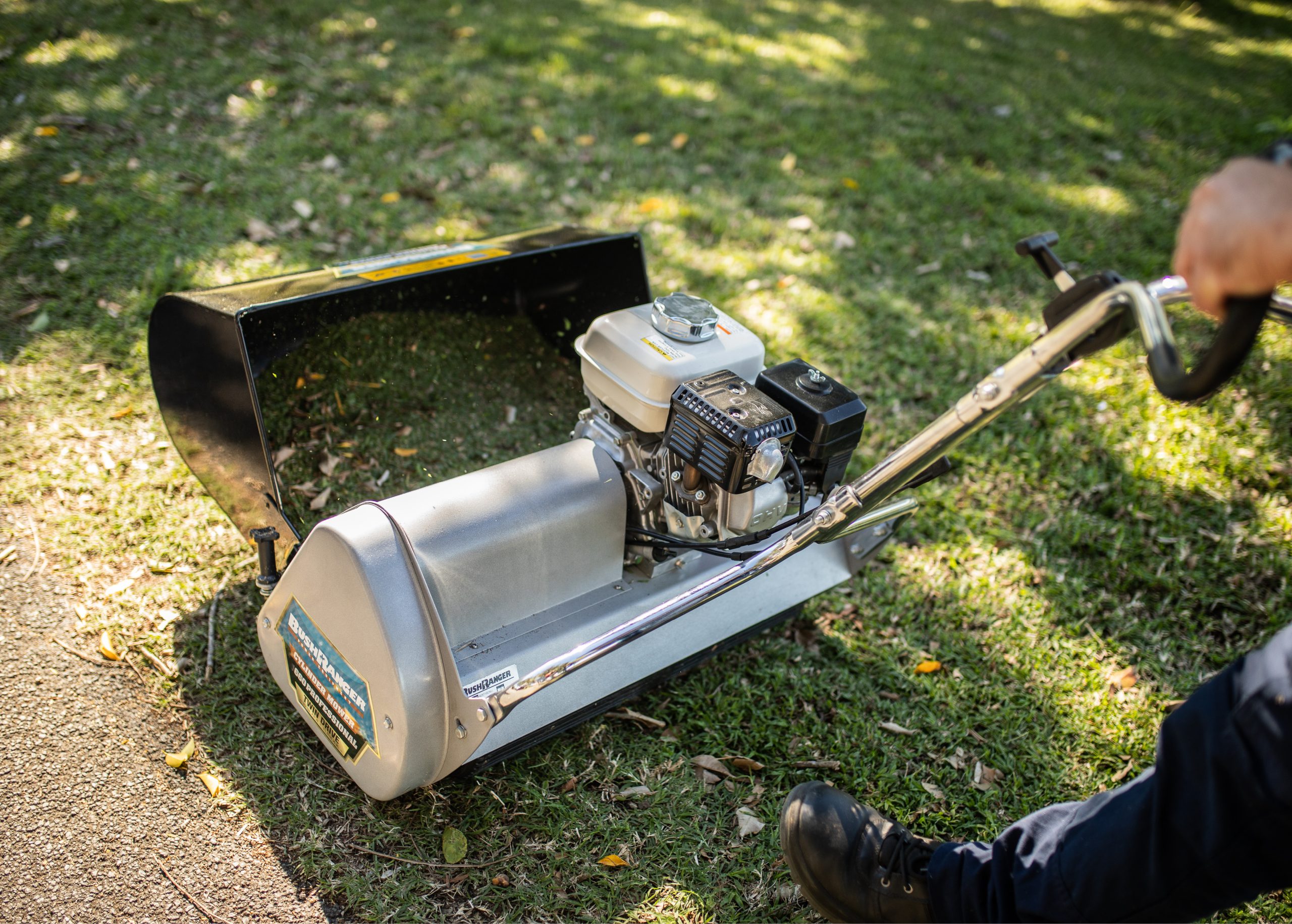
Most mowers can be fitted with a catcher that collects lawn clippings to make it easier to put them in a compost bin or trailer for disposal at the dump.
Catchers and bags can be fitted to the side or rear of your mower, but rear mounted catchers are easier to manoeuvre around obstacles in the yard.
If you prefer to leave your clippings on the lawn, look for a mulching mower, which has blades that cut the grass into very small pieces before spitting it back out. This is best used on finer grasses, such as Zoysia or Couch.
Not sure whether to leave grass clippings on your lawn? Read this article
General mowing guidelines and tips
Whatever type of mower you choose, ensure it performs at its best by following the manufacturer’s operating instructions.
Always wear protective boots and safety glasses when mowing and never touch the blades or engine parts while a mower is running.
Regular maintenance will ensure your mower lasts longer and keeps your lawn looking amazing.
You can read our guide to lawn mower maintenance and troubleshooting here.
Mowing heights
 The general rule of thumb for mowing your lawn is to cut only one third of the leaf each time, and adjust cutting height to the seasons.
During summer, when your lawn will be growing at its fastest, you can cut a little closer to the ground. Try to avoid scalping which puts your lawn under stress and can make it prone to disease, weed or pest outbreaks.
In winter, your lawn should be allowed to grow a little taller to provide insulation against the cold for the roots.
Optimum height and mowing intervals differ between grass types and whether they’re exposed to sun or shade. There’s a guide to the best mowing heights for Buffalo, Zoysia, Kikuyu and Couch lawns here.