
 Looking for something to rid your lawn of pesky weeds? If your lawn is being overrun by weeds and pulling them by hand isn’t working, then a selective herbicide is your best weapon.
Selective herbicides are able to selectively target broad-leaf weeds or grass weeds, depending on the chemical, without harming your lawn, while non-selective herbicides, like glyphosate (Freezone Tuffweed) will kill any plant they come into contact with.
The biggest distinguishing factor between different types of weeds and how they are controlled is whether they are a ‘broad-leaf weed’ or ‘grass weed’.
As the name suggests, grass weeds, like Summer Grass, Winter Grass, and Crab Grass, are biologically very similar to the beautiful grass that makes up your lawn, and the safest way to eliminate them is with a selective pre-emergent herbicide.
A selective pre-emergent herbicide kills the weeds as they germinate from their seeds while leaving your established lawn safe to continue thriving.
Broad-leaf weeds are much easier to control with a selective post-emergent herbicide as they are much more biologically diverse from your grass lawn. Find out more about pre and post-emergent herbicides in this article.
How Do Selective and Non-Selective Herbicides Work?
Selective – Selective herbicides work by targeting specific metabolic processes that plants rely on to survive. Not all plants have the same metabolic processes, so by using a selective herbicide that is safe for your lawn, you can target and eliminate specific weeds without risking your lawn.
For instance, Bow and Arrow is a liquid selective herbicide that controls Broadleaf Weeds, White Clover, Plantain, Capeweed, Cat’s Ear, Bindii, Cudweed and Creeping Oxalis. It is also suitable for use on Zoysia, Kikuyu, Couch and Buffalo grasses.
Non-selective – Non-selective herbicides, such as glyphosate ( or organic alternatives, such as nonanoic acid (Slasher), will harm or kill any living plant they come into contact with, so these are best applied carefully around paths, patios, gardens and bare soil to eliminate weeds in unwanted places.
Benefits and Considerations of Selective and Non-Selective Herbicides
Selective herbicides
Benefits
- Highly specific control of pest weeds without harming your lawn.
- Timing of application can be flexible to suit weed size, growth stage, and weather conditions.
- Provides weed control year-round.
Considerations
- Not all weeds are controlled by a single selective herbicide, and no single selective herbicide controls all weeds – be sure to correctly identify your weeds and weed types (broad-leaf or grass weed) and make sure you have an appropriate herbicide.
- Application of selective herbicides to lawns stressed by heat, drought or frost can result in reduced levels of control and increased damage to your lawn.
- Always use a wetting agent, such as Wetter PCT Surfactant 600 to ensure effective weed control.
Non-selective herbicides
Benefits
- Effectively kills all weeds and unwanted plants.
- Cost-effective.
- Effective in killing old lawn before re-laying area with new turf.
Considerations
- Will harm or kill any living weed/plant they come into contact with, so these are best applied carefully around paths, patios, gardens and bare soil to eliminate weeds in unwanted places.
- Non-selective herbicides, such as glyphosate, are highly damaging to all plants, so it is important to only apply when weather conditions are suitable as the gusty wind can cause spray drift, harming non-target plants and endangering sensitive ecosystems.
Which Herbicide is Right For Your Lawn?
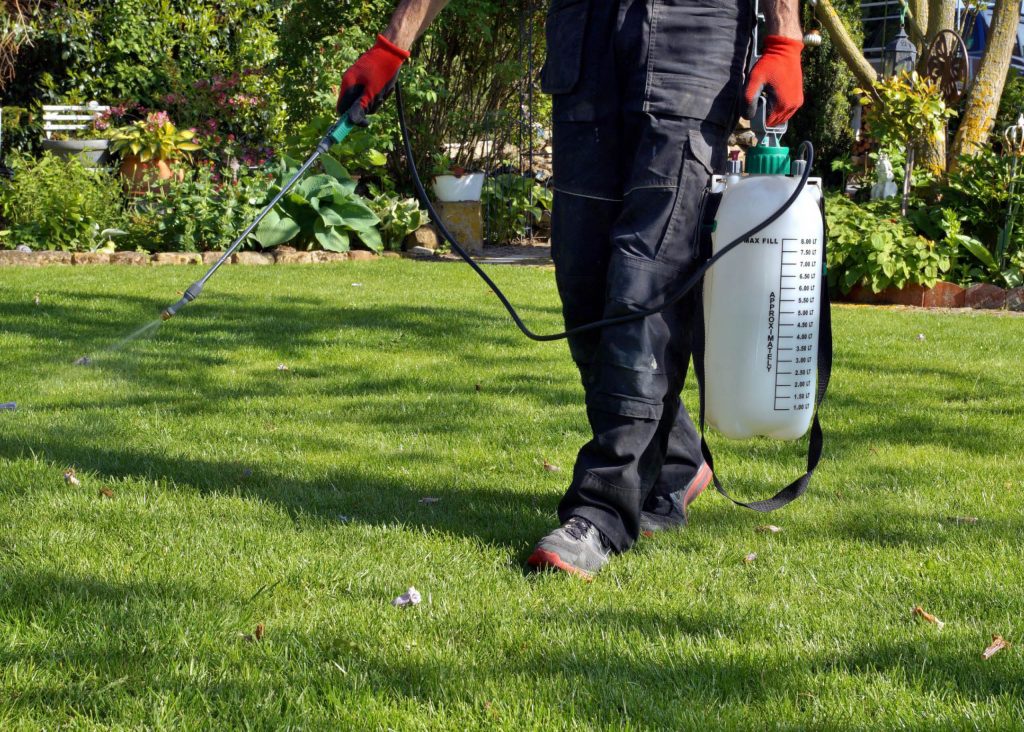 Spraying weeds can be a highly complicated matter as there are different herbicides to treat different lawn weeds.
However, once you know the weed type(s) you can purchase the appropriate herbicide for your needs and apply it with reasonable certainty when following the instructions on the label.
Just remember, for specific weed control use the correct selective herbicide, and for a total clearing of weeds on bare ground, or an old lawn, use a non-selective herbicide.
Most importantly, if using a selective herbicide always check on the label to see if it is suitable for your lawn variety.
myhomeTURF’s online shop has a range of selective and non-selective herbicides to suit your weeding requirements.